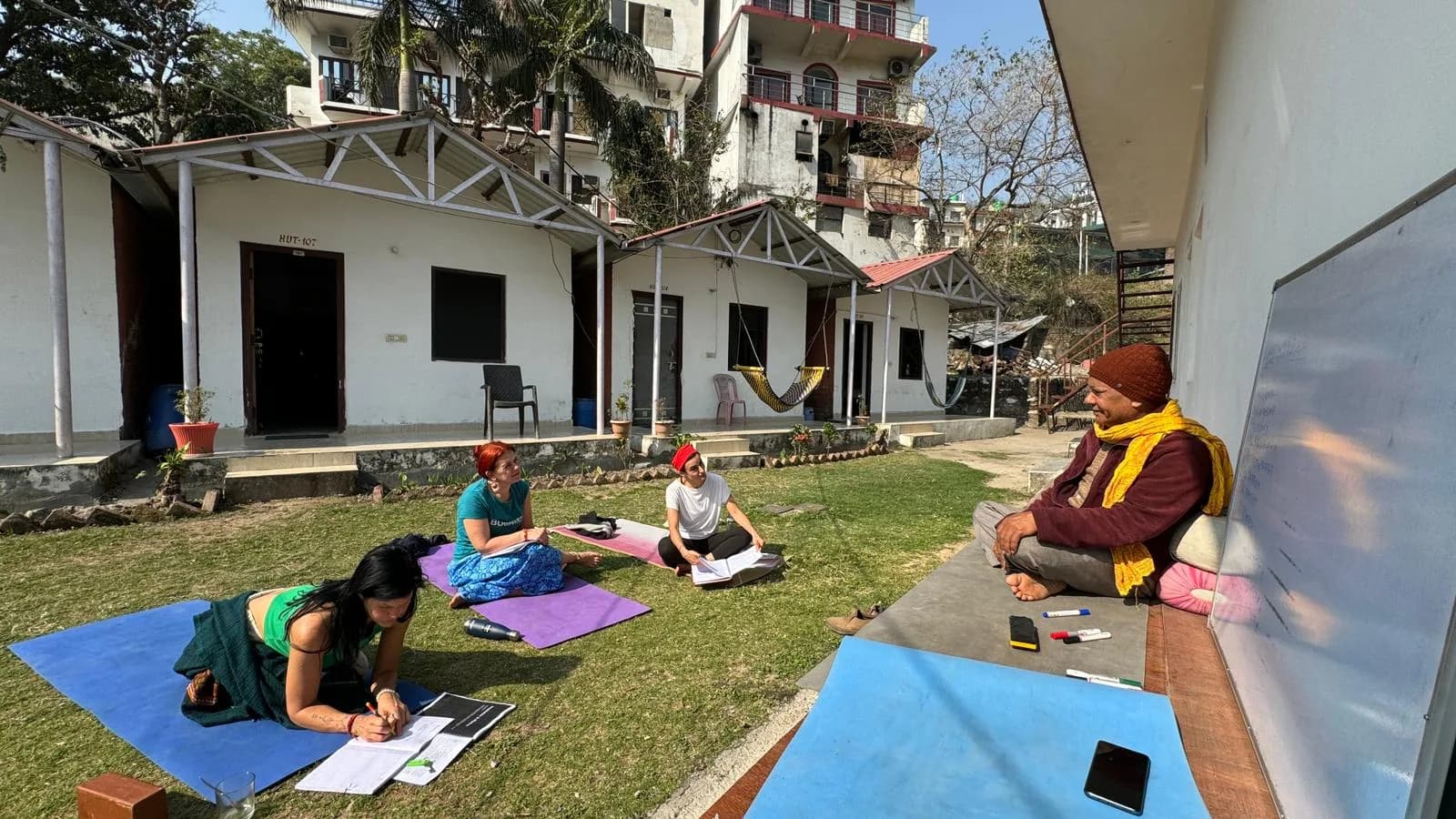
How to Choose the Best Yoga School in Rishikesh
Yoga Alliance certification, instructor lineage, group size, honest reviews — the five things that actually matter when comparing Rishikesh yoga schools.
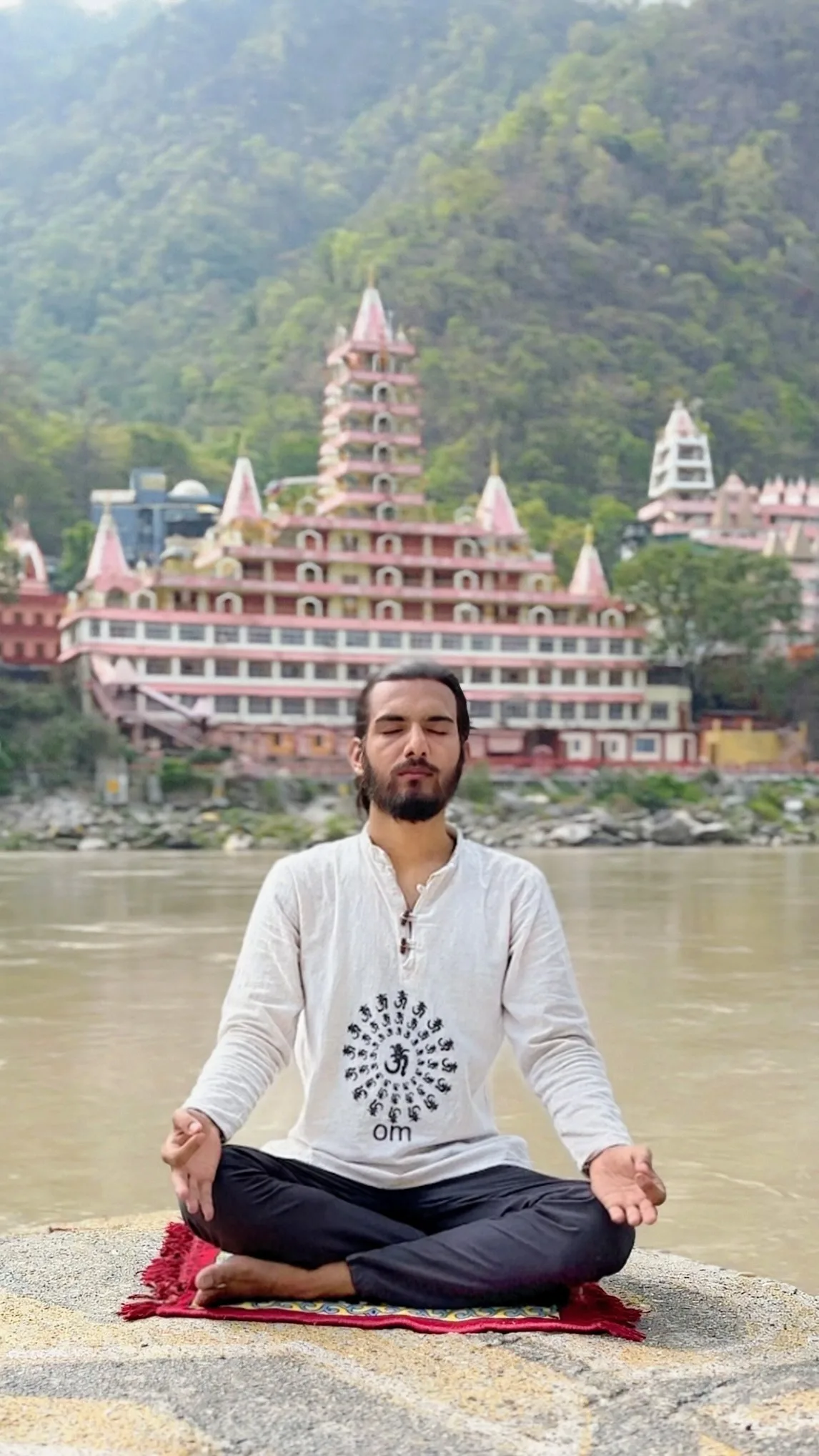
Sudhanshu Badoni
Main Teacher · Lead FacultyMain teacher at Deep Yoga, Tapovan. Runs the YogaAsana YouTube channel (4K+ subs). · 12 yrs teaching
TL;DR
Choosing a yoga school in Rishikesh comes down to five verifiable criteria: Yoga Alliance RYS registration, lead-teacher lineage, group size, transparent pricing, and reviews from named recent graduates. Almost everything else in the marketing language is noise.
- Schools to evaluate: 300+ in Rishikesh, dozens of which are RYS-200 registered
- Investment range: $1,200–$3,500 USD all-in for a 200-hour course
- Decision time: Plan 4–8 weeks of research; never deposit on the first call
Yoga Alliance's public Registered Yoga School (RYS) directory is the only authoritative way to confirm a school's certification status — schools without an active RYS-200 cannot legally issue an RYT-200 credential, no matter what their marketing claims (Yoga Alliance RYS Directory). Verify before depositing.
How to Choose the Best Yoga School in Rishikesh: An Honest, No-Nonsense Guide
Rishikesh has more yoga schools than most cities have coffee shops. A quick search for the best yoga school in Rishikesh returns hundreds of results, each claiming to be "authentic," "traditional," and "life-changing." Some of them genuinely are. Many of them are not. And when you are about to invest several thousand dollars and an entire month of your life into a yoga teacher training, the difference matters enormously.
This guide exists to help you evaluate yoga schools on substance rather than marketing. We will walk through the five criteria that actually separate strong programs from weak ones, the red flags that should make you walk away, and the practical questions you should ask before you hand over a deposit. Whether you end up training with us, with another reputable school, or decide to wait — this article should leave you better equipped to make that decision.
The 5 Things That Actually Matter When Choosing a Yoga School
Forget the Instagram aesthetics and the drone footage of the Ganges at sunrise for a moment. When you strip away the marketing, these are the five factors that determine whether a program will genuinely prepare you to teach yoga — or leave you with a certificate and not much else.
1. Yoga Alliance Registration (RYS Status)
This is the baseline. A Registered Yoga School (RYS) designation from Yoga Alliance means the program has met minimum standards for curriculum hours, instructor qualifications, and educational structure. It does not guarantee excellence — it guarantees a floor.
Without RYS status, your certification may not be recognized internationally. You will not be able to register as an RYT-200 or RYT-500 with Yoga Alliance, which many studios and employers require. Some non-registered schools offer exceptional training, but for most students — especially those planning to teach professionally — RYS registration is non-negotiable.
How to verify: Go directly to the Yoga Alliance online directory. Search for the school by name. If they claim to be registered but do not appear in the directory, that is a serious problem. Do not rely on a logo on their website — verify it yourself.
2. Instructor Credentials and Lineage
A school is only as strong as the people teaching in it. Yet many schools in Rishikesh are vague about who actually leads their trainings. You will see phrases like "our experienced team of yogis" without a single name, bio, or training background listed anywhere on the site.
What you should look for:
- Named lead instructors with publicly available bios detailing their training history, years of teaching experience, and areas of specialization.
- Clear lineage. Where did they study? Under whom? Yoga is a tradition passed from teacher to student. A credible instructor can trace their training to recognized teachers and traditions — whether that is Ashtanga through the Jois lineage, Iyengar through the Iyengar family, Sivananda through the Sivananda Vedanta centers, or Hatha through a recognized guru parampara.
- Relevant certifications. For anatomy instruction, look for instructors with physiotherapy, kinesiology, or sports medicine backgrounds. For philosophy, look for formal study in Sanskrit, Vedic texts, or related disciplines.
- Consistency. Does the same lead instructor teach every cohort, or does the school rotate through freelancers? High instructor turnover is a warning sign.
Do not be shy about asking a school to send you detailed instructor bios. Any program worth attending will be proud to share them. You can also look at our faculty and lineage page as an example of the level of transparency you should expect from any school you are considering.
3. Cohort Size and Student-to-Teacher Ratio
This is one of the most overlooked factors, and one of the most important. A 200-hour yoga teacher training requires significant hands-on correction, individual feedback on teaching practice, and personal mentorship. None of that is possible in a group of 50 or 60 students with two instructors.
Here is a rough guide:
- Excellent: 8-15 students per cohort with at least 2 lead instructors and 1 assistant.
- Acceptable: 16-24 students with 2-3 instructors and dedicated assistants for practicum sessions.
- Questionable: 25-35 students. Individual attention becomes difficult regardless of instructor quality.
- Avoid: 35+ students per cohort. At this scale, economics are driving the program, not pedagogy.
Ask the school directly: "What is the maximum number of students in my cohort, and how many instructors will be present during teaching practicum?" If they dodge the question or give a vague range like "15 to 40," look elsewhere.
4. Genuine Student Reviews
Every school has testimonials on its website. These are curated and, frankly, useless for evaluation. What you need are reviews from platforms the school cannot control.
Where to look:
- Google Reviews: Look for volume and detail. A school with 200+ reviews averaging 4.7 stars tells a different story than one with 12 reviews averaging 5.0 stars. Read the negative reviews carefully — what do people complain about?
- Facebook groups: Search for "yoga teacher training Rishikesh" in Facebook groups. Past graduates are often remarkably candid in group discussions.
- Reddit: The r/yoga and r/yogateachers subreddits have threads specifically about Rishikesh YTT experiences.
- Yoga Alliance reviews: The Yoga Alliance directory includes reviews for registered schools. These tend to be more substantive than Google reviews.
Pay attention to what reviewers say about the substance of training — did they feel prepared to teach? Was the anatomy instruction rigorous? Were they given adequate practice-teaching time? — rather than comments about food quality or room comfort. Those things matter, but they are not what determines whether you emerge as a competent teacher.
5. Curriculum Transparency
A serious school publishes its curriculum in detail. You should be able to see, before enrolling, exactly how many hours are allocated to asana practice, anatomy, philosophy, teaching methodology, practicum, and electives. This is not proprietary information — it is what you are paying for.
Red flags in curriculum descriptions:
- Vague language like "deep dive into yoga philosophy" without specifying which texts are studied (Yoga Sutras? Bhagavad Gita? Hatha Yoga Pradipika?).
- No mention of anatomy or a suspiciously low number of anatomy hours (Yoga Alliance requires a minimum, but good programs exceed it significantly).
- Teaching practicum listed as a small afterthought rather than a major component. You should be doing supervised practice teaching throughout the program, not just in the final week.
- Excessive time allocated to "ceremonies," "excursions," or "free time" that eats into actual training hours.
Compare the curriculum of any school you are considering against the structure of a well-designed 200-hour program to get a sense of what a thorough curriculum looks like in practice.
Red Flags to Watch For
Beyond the five core criteria, there are specific warning signs that should make you pause — or walk away entirely.
- Prices that seem too good to be true. A 200-hour YTT in Rishikesh with accommodation and meals for $800 USD is not a bargain — it is a signal that corners are being cut on instructor pay, food quality, or both. For a realistic breakdown of what training costs in 2026, see our cost guide.
- Aggressive discounting and urgency tactics. "Only 2 spots left!" in every email. "50% off if you book in the next 48 hours." Legitimate programs fill their cohorts through reputation, not pressure.
- No physical address or a frequently changing location. Some fly-by-night operations rent space on a per-cohort basis and have no permanent facility. Ask for a specific address and verify it on Google Maps.
- Reluctance to connect you with alumni. A confident school will happily put you in touch with recent graduates. If they refuse or make excuses, ask yourself why.
- Instructors who claim to teach "their own style" without any identifiable training background. Innovation in teaching is fine. But "I created my own method" without any foundation in an established tradition is a red flag.
- No refund policy or a policy that forfeits 100% of your payment if you cancel for any reason. A reasonable cancellation and refund policy is a sign of a professionally run organization.
Questions to Ask Before You Enroll
Email or call the school and ask these questions directly. How they respond — both the content and the tone — will tell you a lot.
- "Can you send me a detailed daily schedule for the training?" You want to see how every day is structured, from morning meditation to evening lectures. Vagueness here is unacceptable.
- "Who are the lead instructors for my specific cohort dates, and what are their qualifications?" Some schools list senior teachers on their website but assign junior instructors to certain cohorts.
- "What is the maximum cohort size, and what is the student-to-teacher ratio during teaching practicum?"
- "Can I speak with or email two or three recent graduates?"
- "What happens if I need to leave the program early due to illness or emergency? What is your refund or credit policy?"
- "What style or styles of yoga does the training focus on, and which texts are included in the philosophy component?"
- "Are final assessments based on written exams, practical teaching assessments, or both? Is it possible to fail?" A program where everyone passes regardless of competence is a certification mill, not a teacher training.
If a school is annoyed by these questions or gives you canned non-answers, that tells you everything you need to know.
Rishikesh vs. Goa vs. Bali: Why Location Matters More Than You Think
Many aspiring yoga teachers weigh Rishikesh against other popular YTT destinations, particularly Goa and Bali. Each has legitimate strengths, and the right choice depends on what you are looking for.
Rishikesh is the traditional heart of yoga. It is where yoga was systematized, where many of the most influential modern teachers trained, and where the culture of the city itself revolves around spiritual practice. The environment is immersive in a way that beach destinations cannot replicate — you are surrounded by ashrams, temples, and practitioners who have dedicated their lives to sadhana. The Ganges, the Himalayas, the morning aarti at Triveni Ghat — these are not tourist attractions but living elements of a spiritual ecosystem. If your goal is depth, tradition, and an environment that supports intense study, Rishikesh is hard to beat.
Goa offers a more relaxed atmosphere with beach access, a vibrant social scene, and a well-developed tourist infrastructure. Some excellent schools operate in North Goa, particularly in areas like Arambol and Mandrem. The trade-off is that the environment is more vacation-like, which can be either a benefit (less intense, more balanced) or a drawback (more distractions, less immersion). Goa also tends to attract more commercially oriented schools, so careful vetting is even more important.
Bali has become the dominant YTT destination in Southeast Asia, centered around Ubud. The island is beautiful, accommodations tend to be of a higher standard, and there is a thriving wellness community. However, Bali's yoga scene is largely transplanted rather than indigenous, the cost of training is generally higher than in India, and the spiritual context — while genuine in Balinese Hinduism — is different from the Vedic and yogic traditions that underpin most YTT curricula.
If you are seeking the best yoga school in Rishikesh specifically, you have already made a choice that prioritizes tradition, depth, and immersion. That is a strong instinct. Now the question is which school within Rishikesh deserves your trust.
The Neighborhood Matters: Tapovan vs. Laxman Jhula vs. Ram Jhula
Rishikesh is not one homogeneous place. The neighborhood where your school is located will significantly affect your daily experience during training.
Tapovan sits higher up, north of the main tourist areas, in the foothills. It is quieter, greener, and more conducive to focused study. Many serious ashrams and training centers are based here. The trade-off is less access to restaurants, shops, and the social energy of the main town. If you want an immersive, distraction-minimized training environment, Tapovan is ideal. Deep Yoga is based in this area precisely for this reason — the environment supports the kind of concentrated practice that a teacher training demands.
Laxman Jhula (the area around the famous suspension bridge, which has been closed to foot traffic but remains a landmark) is the most popular area with tourists and yoga students. You will find dozens of cafes, bookshops, and yoga-related businesses. The energy is lively and social, which is great for meeting fellow practitioners but can be distracting during an intensive training. Many schools here are positioned along the main road and can be noisy.
Ram Jhula is slightly south of Laxman Jhula, centered around the Sivananda Ashram (Parmarth Niketan) and the famous evening Ganga Aarti. It has a slightly more devotional atmosphere than Laxman Jhula but is still quite busy. Several well-established schools operate in this area, and the proximity to the aarti and the ashram can enrich your experience if you are drawn to the devotional side of yoga.
Rishikesh town proper (Dehradun Road area) is a regular Indian city with traffic, noise, and commercial activity. Very few serious YTT programs are based here, and for good reason — it lacks the contemplative environment that supports intensive training.
When evaluating schools, ask specifically where the training takes place. A school that lists its address as "Rishikesh" without specifying the neighborhood may be in a less desirable location.
What Graduates Actually Say: Patterns From Hundreds of Reviews
Having read through thousands of reviews of yoga schools across Rishikesh — not just our own, but across the entire market — certain patterns emerge consistently in what distinguishes positive training experiences from negative ones.
What graduates of strong programs consistently mention:
- "I felt prepared to teach my first class." This is the single most important outcome of a YTT, and it is surprisingly rare for graduates to say this with confidence.
- "The anatomy instruction changed how I understand my own body." Good anatomy teaching transforms not just your teaching but your personal practice.
- "The instructors gave me honest, specific feedback." Not generic encouragement, but actionable corrections on alignment cues, sequencing decisions, and teaching presence.
- "The group was small enough that I felt seen." This comes back to cohort size every time.
- "It was harder than I expected, but that is why it was valuable." A rigorous program is demanding. Graduates of strong programs acknowledge the difficulty and credit it for their growth.
What graduates of weak programs consistently mention:
- "I got the certificate but I do not feel ready to teach." This is the most damning thing a graduate can say, and it appears with alarming frequency in reviews of certain schools.
- "The schedule kept changing and felt disorganized." Poor planning is a sign of poor management.
- "The lead instructor was different from the one advertised on the website." Bait-and-switch tactics are unfortunately common.
- "There were too many students and not enough individual attention."
- "The philosophy component was superficial." Reading a few verses of the Yoga Sutras with cursory commentary does not constitute philosophy training.
When you read reviews, look for these specific patterns rather than overall star ratings. A thoughtful 4-star review that details what was strong and what was lacking is far more valuable than a 5-star review that says "Amazing experience, loved every moment!"
How to Verify a School's Yoga Alliance Status (Step by Step)
This is straightforward but important enough to walk through explicitly, because fraudulent claims of Yoga Alliance registration are not uncommon in Rishikesh.
- Go to yogaalliance.org.
- Click on "Directory" in the top navigation.
- Select "Schools" (not "Teachers").
- Search for the school by its exact registered name. Note that the registered name may differ slightly from the marketing name — for example, "Shiva Yoga Academy" might be registered as "Shiva Yoga Training Private Limited."
- Verify the school's location matches what they have told you.
- Check what designations the school holds — RYS 200, RYS 300, or both. If you are enrolling in a 200-hour training, the school must hold RYS 200 status specifically.
- Read any reviews posted on the Yoga Alliance listing.
If the school does not appear in the directory, contact Yoga Alliance directly to confirm. Occasionally there are legitimate delays in listing updates, but in most cases, if a school is not listed, it is not registered.
Also be aware of the distinction between Yoga Alliance (US-based, international) and Yoga Alliance International (a separate organization based in India). These are two different bodies. Most international students and studios recognize the US-based Yoga Alliance. Clarify which organization the school is registered with, as this affects the portability of your certification.
Making Your Decision
Choosing where to do your yoga teacher training is a significant decision, and it deserves more than an afternoon of Googling. Here is a summary of the approach we recommend:
- Verify Yoga Alliance RYS status through the official directory. Eliminate any school that cannot demonstrate current registration.
- Research the instructors. Can you find their names, bios, training backgrounds, and lineage? If a school keeps its instructors anonymous, move on.
- Confirm cohort size in writing. Get a specific maximum number and the student-to-teacher ratio for practicum sessions.
- Read reviews on independent platforms. Focus on Google Reviews, Facebook groups, Reddit, and the Yoga Alliance directory. Look for patterns, not isolated opinions.
- Request a detailed curriculum and daily schedule. Compare it against Yoga Alliance's minimum standards and your own learning priorities.
- Ask the hard questions. Contact the school directly with the questions listed above. Judge them on the quality and transparency of their responses.
- Consider the neighborhood. Visit the school's location on Google Maps. Read about the area. Think about what environment will support your learning best.
The best yoga school in Rishikesh for you depends on your goals, your budget, your preferred style of yoga, and the kind of environment in which you learn best. There is no single correct answer. But by applying these criteria rigorously, you will dramatically reduce the risk of choosing a program that wastes your time and money, and dramatically increase the likelihood of a training that genuinely transforms your practice and your ability to share it with others.
If you would like to see how one school approaches these standards, you are welcome to explore our 200-hour program and judge it against the criteria in this guide. We would rather you make an informed decision than a fast one.
Frequently asked questions
How do I check if a yoga school in Rishikesh is registered with Yoga Alliance?
Visit the Yoga Alliance website at yogaalliance.org, navigate to the Directory section, select "Schools," and search for the school by its registered name. The listing will confirm whether the school holds RYS 200 or RYS 300 status. Do not rely on logos or badges on the school's own website — always verify through the official directory. Also confirm whether the registration is with the US-based Yoga Alliance or Yoga Alliance International, as these are separate organizations with different levels of international recognition.
What is a good student-to-teacher ratio for a yoga teacher training?
For a 200-hour yoga teacher training, an ideal cohort size is 8 to 15 students with at least two lead instructors and one assistant, particularly during teaching practicum sessions. Programs with up to 24 students can still deliver quality training if staffed adequately. Be cautious of programs that enroll 30 or more students per cohort, as individual feedback and hands-on correction become very difficult at that scale regardless of instructor quality.
Is Rishikesh better than Bali or Goa for yoga teacher training?
It depends on your priorities. Rishikesh offers unmatched immersion in yoga's cultural and spiritual origins, a concentrated community of serious practitioners, and generally lower costs than Bali. Goa provides a more relaxed beach environment with good training options but more distractions. Bali offers higher-end accommodations and a strong wellness community, but at a higher price point and without the indigenous yogic tradition. If depth, tradition, and an immersive environment are your priorities, Rishikesh is the strongest choice.
How much should a legitimate 200-hour yoga teacher training in Rishikesh cost?
In 2026, a reputable 200-hour YTT in Rishikesh with accommodation and meals typically ranges from $1,200 to $2,800 USD depending on the school's reputation, accommodation quality, cohort size, and instructor caliber. Programs priced significantly below $1,000 USD should be approached with caution, as it is difficult to sustain quality instruction, fair instructor compensation, and adequate facilities at that price point. Very high prices do not automatically guarantee quality either — evaluate the program on its substance, not its price tag.
What should I look for in the curriculum of a yoga teacher training program?
A strong curriculum will clearly break down hours allocated to asana practice, anatomy and physiology, yoga philosophy and history, teaching methodology, practicum (supervised practice teaching), and any elective or specialty modules. Specifically, look for named texts in the philosophy section (such as the Yoga Sutras of Patanjali or the Bhagavad Gita), evidence-based anatomy instruction ideally taught by someone with a clinical background, and substantial practicum hours distributed throughout the program rather than crammed into the final days. Ask for a detailed daily schedule and compare the total contact hours against Yoga Alliance minimums.