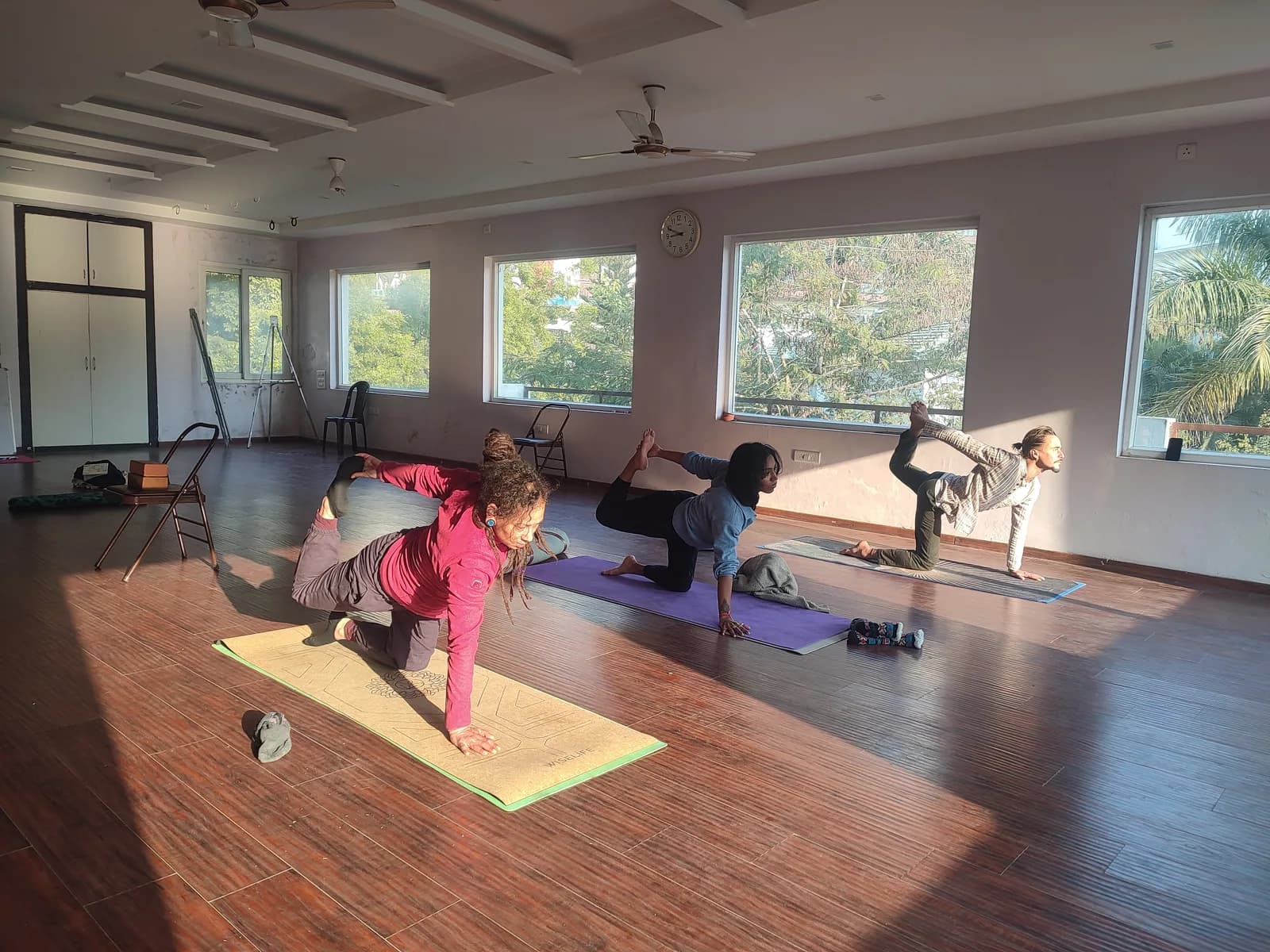
200-Hour Yoga Teacher Training in Rishikesh: A Complete Guide
Everything you need to know about earning your RYT-200 in Rishikesh — curriculum, costs, daily schedule, and how to choose the right school. Updated for 2026.
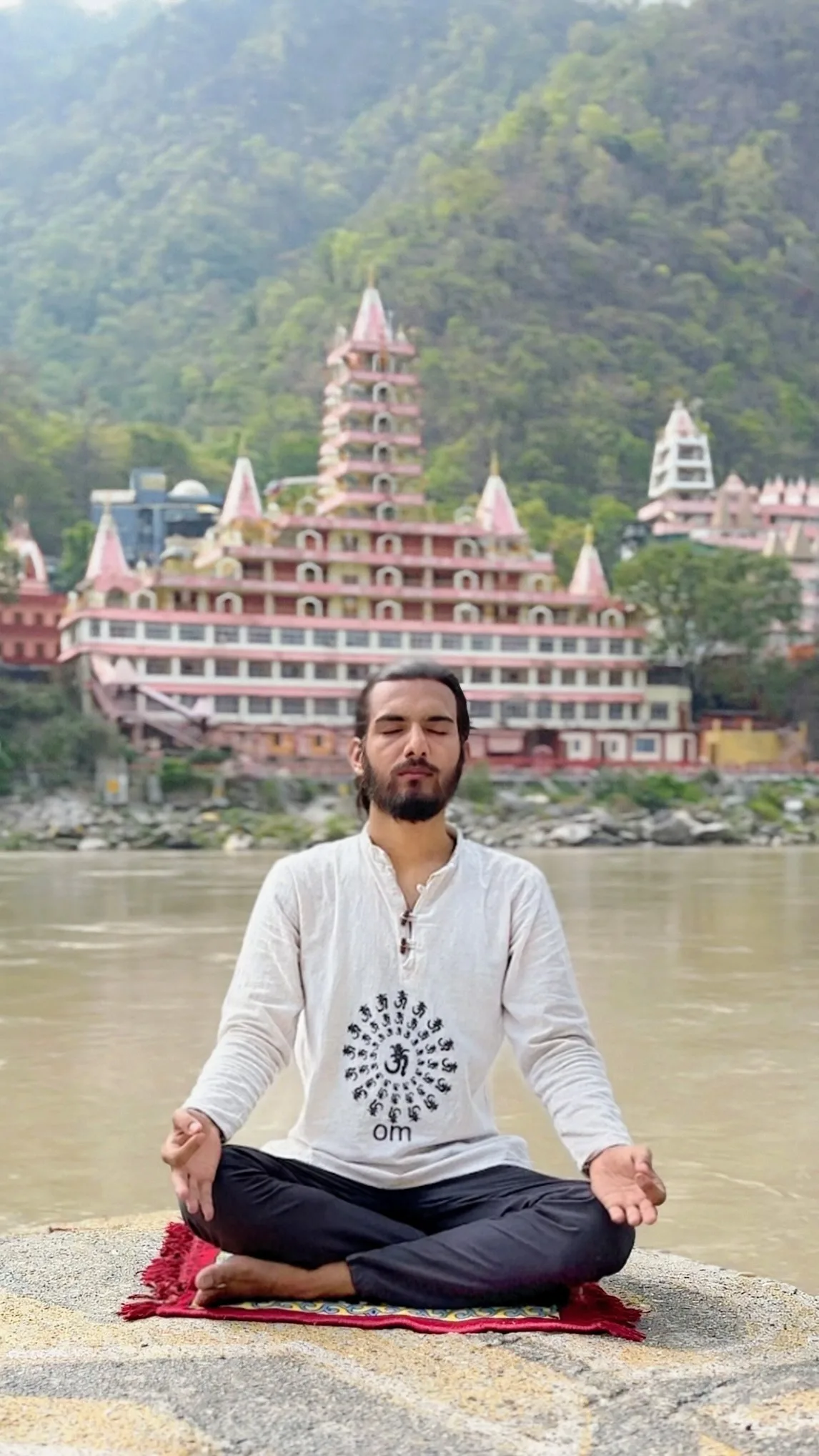
Sudhanshu Badoni
Main Teacher · Lead FacultyMain teacher at Deep Yoga, Tapovan. Runs the YogaAsana YouTube channel (4K+ subs). · 12 yrs teaching
TL;DR
A 200-hour yoga teacher training in Rishikesh is the entry-level Yoga Alliance certification (RYT-200), completed in 25–30 days of immersive residential study at the global home of yoga.
- Cost: $1,200–$3,500 USD all-in, depending on school tier
- Duration: 25–30 days residential, ~7 hours of structured study daily
- Certification: RYT-200 with Yoga Alliance, recognized in 100+ countries
According to Yoga Alliance's published standards, a 200-hour program must include at least 100 hours of asana technique, 30 hours of philosophy, 25 hours of teaching methodology, 20 hours of anatomy, and 10 hours of practicum — totaling 200 contact hours of instruction (Yoga Alliance RYS Standards).
Rishikesh sits at the foothills of the Himalayas where the Ganges carves through forested valleys — the global epicenter of yoga education for over a century. A 200 hour yoga teacher training in Rishikesh is the foundational certification that lets you teach in studios, retreats, and gyms worldwide. Every year, thousands of aspirants from 60+ countries arrive in Tapovan, Laxman Jhula, and Ram Jhula for this intensive journey. This guide covers what the training involves, what it costs, and how to pick the right school.
What Is a 200 Hour Yoga Teacher Training?
A 200 hour yoga teacher training (YTT) is the entry-level professional certification established by Yoga Alliance. Over 25 to 30 days of immersive study, you complete a minimum of 200 contact hours across five core disciplines: asana technique, anatomy and physiology, yoga philosophy, teaching methodology, and practicum. Upon graduation from a Registered Yoga School (RYS), you become eligible to register as a RYT-200 — a credential recognized in over 100 countries.
In Rishikesh specifically, the training carries a distinct weight. You are studying yoga in its birthplace, surrounded by ashrams that have hosted practitioners for generations. The curriculum at most Rishikesh schools draws from Hatha and Ashtanga Vinyasa lineages, with direct connections to texts like the Yoga Sutras of Patanjali and the Hatha Yoga Pradipika. This is not a resort-style retreat — it is rigorous, transformative, and deeply rooted in tradition. Explore our 200-hour program page for specifics on the syllabus and schedule.
What the 200 Hour Yoga Teacher Training Curriculum Covers
Yoga Alliance mandates minimum hours across specific categories. Here is what a well-structured 200 hour yoga teacher training in Rishikesh typically includes:
- Asana Practice & Technique (100+ hours): Daily practice of Hatha yoga, Ashtanga Vinyasa primary series, alignment workshops, and hands-on adjustments. You will learn 80–120 postures with their Sanskrit names, modifications, contraindications, and sequencing logic.
- Anatomy & Physiology (20+ hours): Musculoskeletal anatomy relevant to yoga — how the shoulder girdle moves in Chaturanga, why the sacroiliac joint is vulnerable in twists, and how the respiratory diaphragm functions during pranayama.
- Yoga Philosophy & Ethics (30+ hours): Study of the Yoga Sutras, the eight limbs of Ashtanga, Samkhya philosophy, the Bhagavad Gita, and the ethical commitments of teaching (yamas and niyamas applied to the modern classroom).
- Teaching Methodology (25+ hours): Voice projection, class sequencing, cueing techniques, use of props, managing mixed-level groups, and creating inclusive environments.
- Practicum (10+ hours): Practice teaching sessions with peer feedback, observed teaching with instructor evaluation, and at least one full-length class taught independently before graduation.
- Pranayama & Meditation (15+ hours): Kapalabhati, Nadi Shodhana, Bhastrika, Ujjayi, and seated meditation techniques including Trataka and Yoga Nidra.
- Mantra Chanting & Kriyas (10+ hours): Traditional Vedic chanting, kirtan sessions, and shatkarma cleansing practices like Jala Neti and Sutra Neti.
A Typical Daily Schedule During 200 Hour YTT in Rishikesh
The daily rhythm of a 200 hour yoga teacher training in Rishikesh is intense by design. Most schools follow a schedule similar to this:
- 5:30 AM — Shatkarma & Pranayama: Wake before dawn. Begin with nasal cleansing (Jala Neti), then 45 minutes of structured breathing exercises on the rooftop as mist lifts off the Ganges below.
- 6:30 AM — Meditation & Mantra Chanting: Seated meditation followed by group chanting of traditional mantras. The sound carries across Tapovan in the still morning air.
- 7:30 AM — Breakfast: Sattvic vegetarian meals — fresh fruit, porridge, herbal tea. No caffeine at most traditional schools.
- 8:30 AM — Asana Practice (Hatha or Ashtanga): Two-hour led practice. Expect deep corrections, long holds, and progressive intensity as the weeks advance.
- 10:30 AM — Anatomy or Philosophy Lecture: Classroom sessions with textbooks, skeleton models, and discussion.
- 12:30 PM — Lunch: The main meal — dal, rice, seasonal vegetables, chapati. Meals are communal and silent eating is encouraged.
- 2:00 PM — Self-Study or Rest: Time for journaling, reading assigned texts, reviewing anatomy notes, or simply resting.
- 3:30 PM — Teaching Methodology / Alignment Workshop: Hands-on workshops where you practice cueing, adjusting, and sequencing with your cohort.
- 5:30 PM — Evening Asana Practice: A second, often gentler practice — restorative, yin, or Hatha flow.
- 7:00 PM — Dinner: Light meal, followed by evening free time.
- 8:30 PM — Lights encouraged off. Rest is non-negotiable during intensive training.
One day per week is typically free. Most students use it to walk across the suspension bridge at Ram Jhula, visit the Beatles Ashram, take a dip at the Triveni Ghat, or hike to nearby waterfalls.
How to Choose a Yoga School for Your 200 Hour Training in Rishikesh
Rishikesh has over 300 schools offering yoga teacher training, and the quality varies enormously. Choosing well is the single most important decision you will make. Here is what to evaluate — and for a deeper breakdown, read our full guide on choosing a school.
Yoga Alliance Registration
Only train at a school registered with Yoga Alliance as an RYS 200. Verify registration directly on the Yoga Alliance website — some schools falsely claim affiliation.
Group Size
Schools range from 8-student cohorts to 50+ batches. Smaller groups (under 20) mean more personal adjustments and more teaching practice time per student. Ask directly: "How many students will be in my batch?"
Lineage and Teaching Style
A Hatha-focused school emphasizes static holds and classical sequencing. An Ashtanga school drills the primary series daily. A multi-style school blends Vinyasa, Hatha, and Yin. Choose based on the style you want to teach, not just the style you enjoy practicing.
Lead Teacher Experience
Look for lead teachers with 10+ years of experience, E-RYT 500 credentials, and a lineage connection to a recognized master. A school is only as strong as its instructors.
Accommodation and Reviews
Ask to see photos of actual rooms (not staged images), inquire about hot water availability (critical in winter), and whether meals are included. Most reputable schools in Tapovan and Laxman Jhula provide clean rooms with attached bathrooms. Go beyond Google reviews — check Facebook alumni groups and ask the school to connect you with recent graduates.
Cost Breakdown: 200 Hour Yoga Teacher Training in Rishikesh
One of the strongest arguments for training in Rishikesh is the cost. Compared to Western countries or resort destinations, Rishikesh delivers world-class instruction at a fraction of the price. Here is what you can expect to pay in 2026:
- Budget schools: $1,200–$1,500 USD (INR 1,00,000–1,25,000) — shared accommodation, basic facilities, large group sizes. Quality varies; vet carefully.
- Mid-range schools: $1,500–$2,200 USD (INR 1,25,000–1,85,000) — private rooms, experienced teachers, groups of 15–25, well-maintained facilities. This is the sweet spot for most international students.
- Premium schools: $2,200–$3,500 USD (INR 1,85,000–2,95,000) — boutique group sizes (8–12), luxury accommodation, renowned lead teachers, additional excursions, and post-graduation mentorship programs.
These prices almost always include accommodation, three daily meals, course materials, and the certification fee. What they typically do not include: flights, visa fees (approximately $25 for an e-Tourist visa), travel insurance, and personal expenses.
For a line-by-line cost analysis including hidden fees and money-saving tips, see our dedicated cost breakdown article.
Rishikesh vs Other Popular YTT Destinations
| Factor | Rishikesh, India | Bali, Indonesia | Costa Rica |
|---|---|---|---|
| Average Cost (USD) | $1,500–$2,500 | $2,500–$4,000 | $3,000–$5,500 |
| Duration | 25–30 days | 25–28 days | 21–28 days |
| Primary Style | Hatha, Ashtanga, Classical | Vinyasa Flow, Yin | Vinyasa, Power Yoga |
| Cultural Depth | Deep — birthplace of yoga, ashram culture, Sanskrit study | Moderate — Balinese Hindu influence | Light — nature-focused, wellness-oriented |
| Climate | Best Oct–Apr; hot May–Jun; monsoon Jul–Sep | Year-round warm; dry season Apr–Oct | Best Dec–Apr (dry season) |
| Visa Ease | E-visa available for most nationalities | Visa on arrival / free for many countries | Visa-free for most Western countries |
| Food Included | Almost always (3 meals/day) | Usually (2–3 meals/day) | Usually (3 meals/day) |
| Post-Training Job Market | Strong for teaching in India and Asia | Strong for retreat-style teaching | Strong for Western studio teaching |
Rishikesh consistently offers the best value — not just financially, but in terms of depth of instruction. The philosophical and spiritual dimensions of the training are richer here because they are taught in their original context.
What to Expect Week by Week During Your Training
Understanding the arc of a 200 hour yoga teacher training in Rishikesh helps you prepare mentally. The experience unfolds in distinct phases:
Week 1: Orientation and Foundation
Everything is new — the schedule, the food, the altitude, the intensity. Your body protests the 5:30 AM wake-ups and the two daily asana sessions. You learn the basic alignment principles, begin memorizing Sanskrit posture names, and start to form bonds with your cohort. Soreness is universal. Homesickness is common. Trust the process.
Week 2: Deepening
Your body starts adapting. Postures that felt impossible in week one begin to open. Philosophy classes become more engaging as you connect Patanjali's teachings to your own experience on the mat. You begin your first practice-teaching sessions — nerve-wracking but essential. The Rishikesh rhythm starts to feel natural.
Week 3: Integration and Teaching Practice
This is where the transformation accelerates. You teach longer sequences, receive detailed feedback, and refine your voice and presence. Anatomy knowledge starts clicking — you understand why you cue specific actions, not just what to say. Many students describe this week as emotionally intense; the combination of physical exertion, sleep discipline, and self-examination surfaces things you did not expect.
Week 4: Examination and Graduation
Written and practical exams. You teach a full 60-minute class observed by senior instructors. There is a closing ceremony, often held on the banks of the Ganges at sunset. You leave Rishikesh with a certificate, a radically different relationship with your body, and a global network of fellow teachers.
Who Should Apply for a 200 Hour Yoga Teacher Training in Rishikesh?
This training is not exclusively for people who want to teach professionally. The 200 hour yoga teacher training in Rishikesh is right for you if:
- You have a consistent yoga practice (at least 6–12 months) and want to deepen your understanding of asana, philosophy, and breathwork.
- You want to become a certified yoga instructor and begin teaching professionally.
- You are a fitness professional — personal trainer, Pilates instructor, physical therapist — looking to add yoga to your skill set.
- You are seeking a structured, immersive experience for personal growth and self-discipline.
- You are a practicing yoga teacher trained in a different style who wants to study traditional Hatha or Ashtanga at the source.
Most schools require six months of prior practice but do not demand advanced flexibility or strength. You do not need to hold a handstand — you need willingness to learn and the mental readiness for an intensive, disciplined month.
How to Prepare for Your 200 Hour YTT in Rishikesh
Preparation makes the difference between surviving the training and thriving in it. Start these steps at least two months before your arrival:
Physical Preparation
Build a consistent daily practice of 60–90 minutes. Focus on Sun Salutations A and B, standing postures, and basic inversions. Strengthen your core and shoulders — Chaturanga volume is high during training. Start a pranayama practice of at least 10 minutes daily.
Reading and Study
Read at minimum: The Yoga Sutras of Patanjali (Swami Satchidananda translation), Light on Yoga by B.K.S. Iyengar, and a basic anatomy text. Arriving with foundational knowledge lets you absorb lectures at a deeper level.
Logistics
- Visa: Apply for an Indian e-Tourist visa at least two weeks before travel. Processing typically takes 3–5 business days.
- Flights: Fly into Dehradun (Jolly Grant Airport), which is 35 km from Rishikesh. Many schools offer airport pickup. Alternatively, fly into Delhi and take a 6-hour drive or overnight bus.
- Packing: Bring 2–3 sets of comfortable practice clothing, a light jacket (mornings are cool even in October), a headlamp, a reusable water bottle, and any personal medications. Most schools provide yoga mats and props.
- Health: Consult your doctor about recommended vaccinations (Hepatitis A, Typhoid). Bring a basic first-aid kit and electrolyte sachets — digestive adjustment during the first few days is common.
- Money: ATMs are available in Rishikesh but can be unreliable. Carry some USD or EUR for exchange. Most schools accept the full fee via bank transfer before arrival.
Mental Preparation
Set realistic expectations. You will be tired, you will face limitations, and you will eat the same food daily. All of this is part of the training. Approach it with openness, and the month will give you far more than a certificate — it will reshape how you relate to your body, your mind, and your capacity to hold space for others.
Ready to begin? Review our 200-hour yoga teacher training program for upcoming dates, pricing, and enrollment details.
Frequently asked questions
How long does a 200 hour yoga teacher training in Rishikesh take?
Most programs run between 25 and 30 days in a residential, immersive format. You live at the school, follow a structured daily schedule from 5:30 AM to 8:30 PM, and complete all 200 contact hours within that period. Some schools offer 28-day programs with one rest day per week.
Do I need prior yoga experience to join a 200 hour YTT in Rishikesh?
Most schools require a minimum of 6 to 12 months of consistent yoga practice. You do not need to be advanced — you should be comfortable with basic Sun Salutations, standing postures, and sitting for meditation. The training will build your skills progressively from wherever you start.
Is the 200 hour yoga teacher training certificate from Rishikesh recognized internationally?
Yes, provided you train at a school registered with Yoga Alliance as an RYS 200 (Registered Yoga School). Upon completion, you can register as an RYT-200 (Registered Yoga Teacher) with Yoga Alliance, which is recognized in over 100 countries including the United States, Canada, the UK, Australia, and across Europe.
What is the best time of year to do yoga teacher training in Rishikesh?
The best months are October through April. October and November offer warm days and cool mornings with clear Himalayan views. February through April brings gradually warming weather and beautiful spring conditions. Avoid July through September due to heavy monsoon rains, and note that May through June can be extremely hot with temperatures exceeding 40 degrees Celsius.
How much does a 200 hour yoga teacher training in Rishikesh cost?
Prices range from $1,200 to $3,500 USD depending on the school, accommodation type, and group size. Mid-range programs between $1,500 and $2,200 USD offer the best balance of quality and value. This typically includes accommodation, three vegetarian meals daily, course materials, and certification. Flights, visa, and personal expenses are additional.
Can I teach yoga anywhere in the world after completing my 200 hour training?
With an RYT-200 certification from a Yoga Alliance registered school, you are qualified to teach in studios, gyms, wellness centers, and retreat settings worldwide. Some countries or employers may have additional local requirements, but the Yoga Alliance credential is the most widely accepted standard globally. Many graduates also teach online or start private instruction immediately after certification.