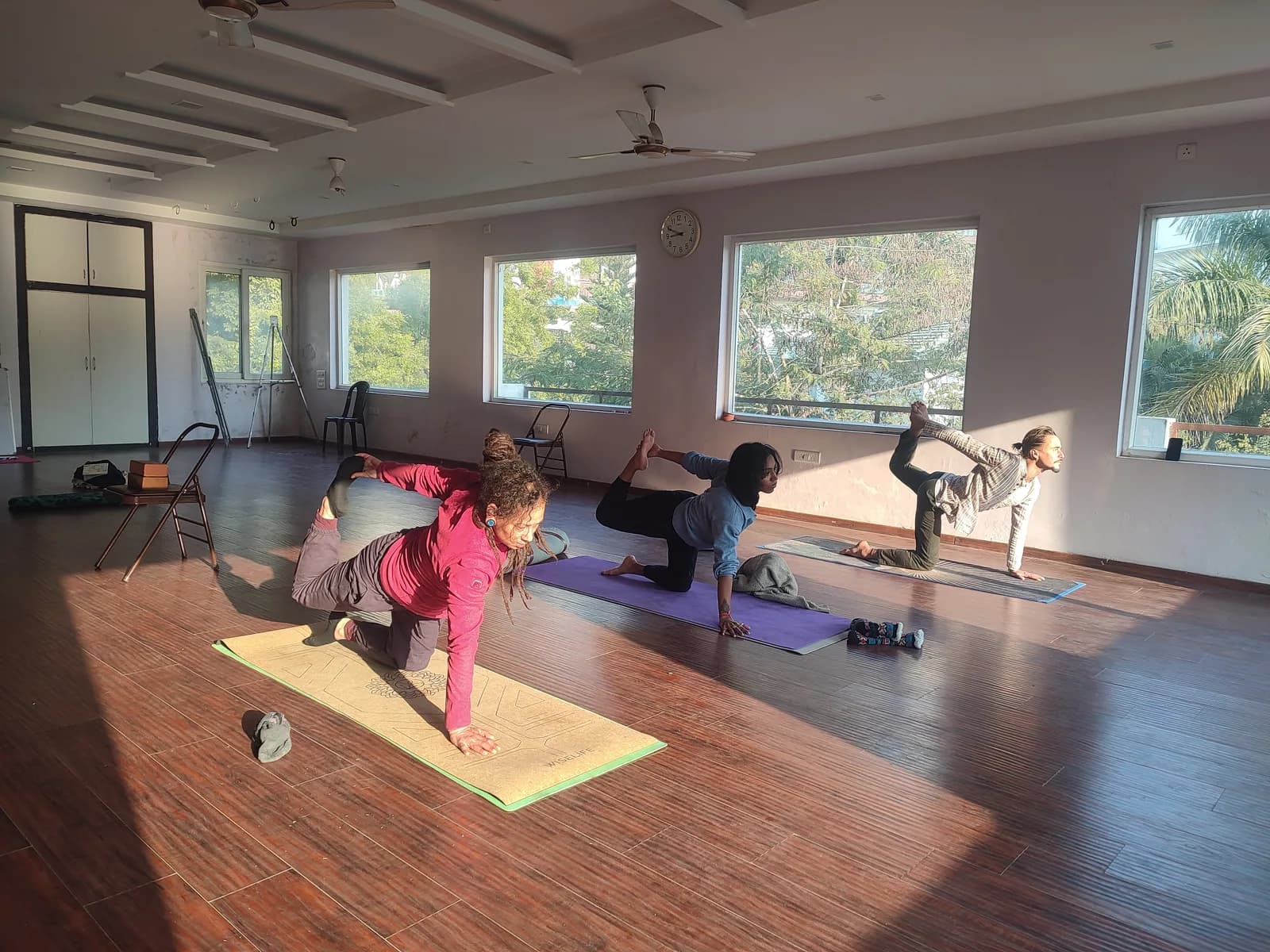
300-Hour Yoga Teacher Training in Rishikesh: What to Expect
The advanced YTT for RYT-200 graduates. What the 300-hour covers, who it's for, prerequisites, and how it differs from the foundational training.
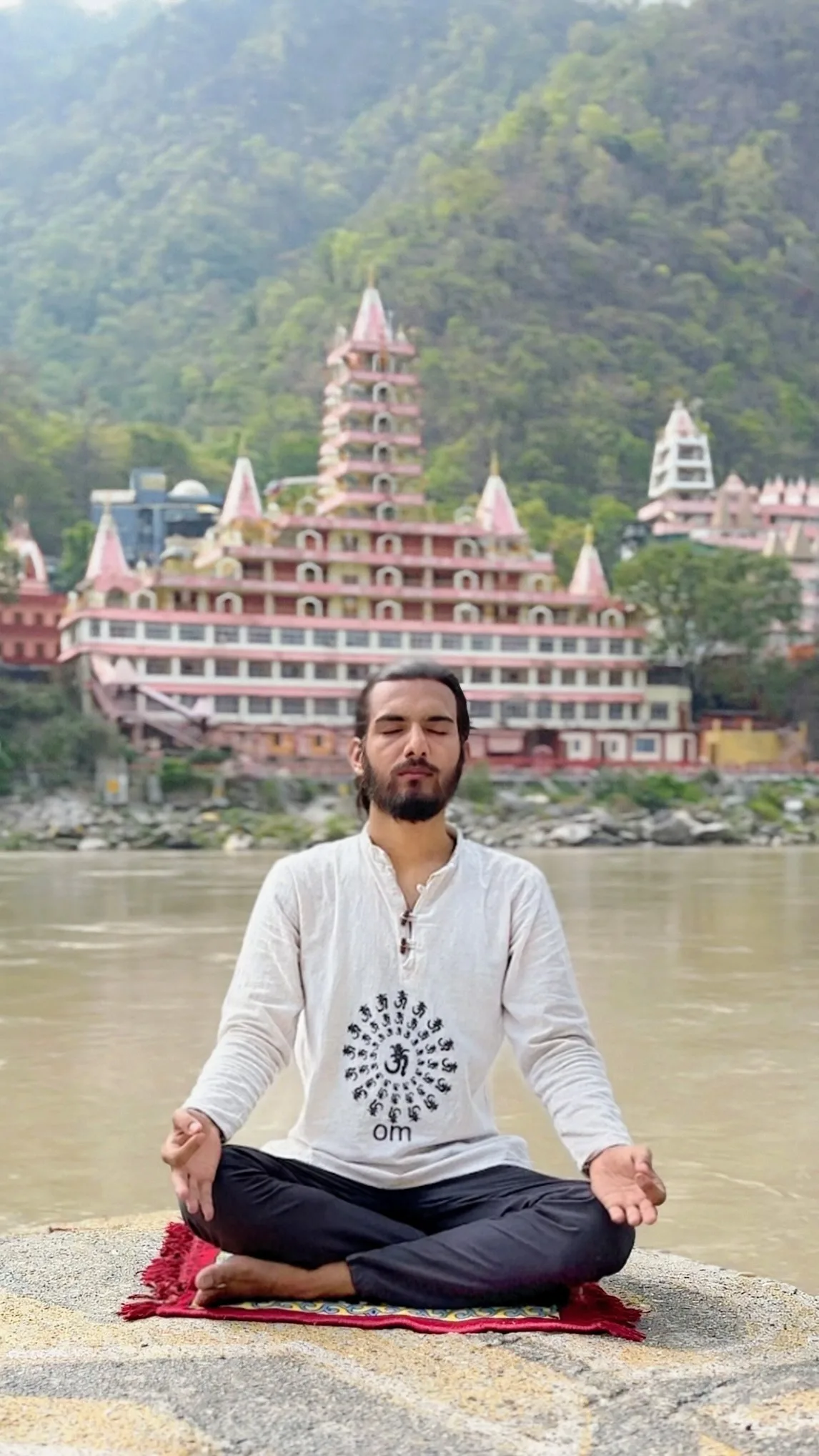
Sudhanshu Badoni
Main Teacher · Lead FacultyMain teacher at Deep Yoga, Tapovan. Runs the YogaAsana YouTube channel (4K+ subs). · 12 yrs teaching
TL;DR
The 300-hour yoga teacher training in Rishikesh is the advanced certification that completes the path to RYT-500. It is fundamentally different from the 200-hour — less foundational, more surgical, with filmed practicum and deep textual study.
- Duration: 27 days residential
- Prerequisite: Valid RYT-200 plus ~100 hours of teaching experience
- Outcome: Combined with prior 200hr, qualifies for Yoga Alliance RYT-500
According to Yoga Alliance, fewer than 15% of registered yoga teachers worldwide hold an RYT-500 — the credential that combines a 200-hour foundation with a 300-hour advanced training. The 300-hour module is what separates the half who teach a few weekly classes from the senior tier who lead retreats, train other teachers, and qualify for yoga therapy pathways (Yoga Alliance RYS Standards).
300 Hour Yoga Teacher Training in Rishikesh: What to Expect, Who It's For, and How to Prepare
You finished your 200-hour certification. You taught classes, built sequences, learned the difference between Warrior I and Warrior II at a muscular level. And then — somewhere between your fiftieth Sun Salutation cue and your hundredth "take a deep breath" — you realized you were only scratching the surface. That restlessness is exactly why the 300-hour yoga teacher training exists.
A 300 hour yoga teacher training in Rishikesh is not a repeat of your first certification with extra hours stapled on. It is a fundamentally different experience: less foundational, more surgical. You study fewer postures but understand them at the level of fascia, energetic anatomy, and therapeutic application. You teach real students on camera, receive frame-by-frame feedback, and graduate with a teaching portfolio — not just a certificate. Here is exactly what that looks like, day by day and module by module.
What Is a 300 Hour Yoga Teacher Training?
A 300-hour YTT is the second tier of Yoga Alliance certification. Combined with your initial 200-hour training, it qualifies you to register as an RYT-500 — the highest individual teaching credential Yoga Alliance offers. But the credential is secondary to what actually happens during the training.
Where a 200-hour program builds your base — alignment cues, sequencing templates, basic anatomy, introductory philosophy — a 300-hour program assumes that base already exists and starts layering depth. You study pranayama not as "three breathing exercises to open class" but as a standalone discipline with contraindications, energetic effects, and progressive stages. You learn to read a student's body and modify in real time, not from a list of memorized alternatives but from anatomical reasoning. You study the Yoga Sutras not as inspirational quotes but as a coherent philosophical system with direct implications for how you structure a class, hold space, and manage your own nervous system as a teacher.
In Rishikesh specifically, this depth takes on a geographic dimension. The city has been a center of yogic study for centuries — not decades, centuries. When you study pranayama at 5:30 a.m. overlooking the Ganges at Laxman Jhula, or practice silence walking through the trails above Neelkanth Mahadev Temple, the environment is not decorative. The altitude, the river air, the sattvic food culture, and the sheer density of serious practitioners create conditions that are difficult to replicate in a studio in London or Los Angeles.
How a 300 Hour Training Differs from a 200 Hour Program
The simplest way to understand the difference: a 200-hour program teaches you to practice and instruct. A 300-hour program teaches you to think, adapt, and lead. Below is a concrete breakdown.
| Component | 200-Hour YTT | 300-Hour YTT |
|---|---|---|
| Asana Practice | 100+ hours — foundational alignment, standard sequences | 75 hours — advanced postures, therapeutic variations, injury-specific modifications |
| Anatomy & Physiology | 20 hours — major muscle groups, basic biomechanics | 40 hours — fascial lines, nervous system regulation, energetic anatomy (nadis, chakras as physiological maps) |
| Philosophy & Ethics | 20 hours — introduction to Yoga Sutras, yamas/niyamas overview | 50 hours — deep study of Sutras, Bhagavad Gita, Hatha Yoga Pradipika; ethics of teaching vulnerable populations |
| Pranayama & Meditation | 15 hours — basic techniques (Nadi Shodhana, Ujjayi, guided meditation) | 45 hours — Kapalabhati progressions, Bhastrika with bandhas, Kumbhaka stages, Yoga Nidra facilitation, silent meditation intensives |
| Teaching Methodology | 25 hours — sequencing basics, peer teaching | 60 hours — filmed practicums, live student teaching, feedback rounds, niche class design (prenatal, seniors, athletes, trauma-informed) |
| Practicum & Assessment | 10 hours — peer-taught classes | 30 hours — filmed full-length classes with external students, written self-assessments, mentor review |
| Certification Outcome | RYT-200 eligible | RYT-500 eligible (combined with prior 200-hour) |
Notice the shift. The 200-hour program front-loads asana. The 300-hour program redistributes those hours heavily toward philosophy, pranayama, and teaching methodology. You spend less time on the mat doing postures and more time understanding why you would — or would not — include a particular posture for a particular student.
Prerequisites: What You Need Before You Apply
This is non-negotiable: you must hold a 200-hour yoga teacher training certification from a Yoga Alliance-registered school (or an equivalent recognized program) before enrolling in a 300-hour training. This is not a bureaucratic formality. The curriculum assumes you already know how to sequence a vinyasa class, cue alignment for all major asana categories, and demonstrate basic pranayama techniques. If you arrive without that foundation, you will spend the entire first week catching up instead of going deeper.
Beyond the certification, honest self-assessment matters. Ask yourself:
- Have you been teaching regularly? Even if just to friends, community classes, or online — some active teaching experience makes the practicum modules dramatically more useful. You arrive with real questions about real challenges, not hypothetical ones.
- Do you have a personal practice? A 300-hour training is physically and mentally demanding. Expect 6 to 8 hours of structured activity daily. If your last time on a mat was during your 200-hour training two years ago, spend at least 8 weeks rebuilding a daily practice before you fly to Rishikesh.
- Are you ready for discomfort? This is not a retreat. Philosophy modules will challenge beliefs you hold about yourself as a teacher. Filmed practicums will show you habits you did not know you had — the filler words, the pacing issues, the tendency to demonstrate instead of observe. Growth requires friction.
If you completed your 200-hour certification and want to progress directly into a 500-hour track without a gap, some schools offer a 500-hour combined path that integrates both levels sequentially. This is worth considering if you have the time and budget to commit upfront.
Advanced Curriculum: What You Will Actually Study
The word "advanced" gets overused in yoga marketing. Here is what it means concretely in a rigorous 300-hour program in Rishikesh.
Pranayama as a Standalone Discipline
In your 200-hour training, pranayama was likely a warm-up or cool-down — five minutes of alternate nostril breathing before asana. In a 300-hour program, pranayama gets its own dedicated daily session, typically 60 to 90 minutes at dawn. You progress through Kapalabhati at increasing speeds, learn Bhastrika with Mula and Uddiyana Bandha engagement, and practice extended Kumbhaka (breath retention) with careful monitoring. You study contraindications — why Kapalabhati is inappropriate for students with unmanaged hypertension, why Bhastrika should not be taught to pregnant students, why retention practices require gradual progression over weeks rather than being dropped into a single class.
In Rishikesh, these early morning sessions happen in open-air shalas with the sound of the Ganges below. It is not scenery — the cool, clean morning air at the foothills of the Himalayas creates genuinely different breathing conditions than a heated studio. Your lung capacity and breath control develop faster when you are not competing with recycled air and urban particulate.
Philosophy Deep-Dive
Philosophy in a 300-hour training means sustained textual study. Expect to read and discuss specific sutras from Patanjali line by line — not paraphrased summaries but the Sanskrit terms, their multiple possible translations, and the commentarial traditions that interpret them differently. You will study the Bhagavad Gita's framework of Karma, Jnana, and Bhakti Yoga as distinct paths and debate how those frameworks inform modern teaching. You will work through chapters of the Hatha Yoga Pradipika and understand why its instructions for Shatkarma (cleansing practices) exist in a specific developmental sequence.
Many schools in Rishikesh bring in local scholars — often from families with multigenerational lineages in Vedantic or Shaivite study — to teach these modules. The depth of knowledge available in this city, from people who have spent decades on a single text, is one of the primary reasons serious students travel here for advanced training rather than taking it locally.
Filmed Teaching Practicums
This is where 300-hour programs separate themselves most clearly. You will teach full 60- and 75-minute classes to real students — not your fellow trainees role-playing but actual yoga practitioners from the Rishikesh community or visiting students. These classes are filmed. Afterward, you sit with a mentor and review the footage: your voice projection, your physical positioning in the room, your adjustment timing, your ability to read the room and modify the plan when a student is struggling. You receive written feedback and then teach again, incorporating corrections.
By the end of the training, you will have a portfolio of two to four filmed classes that demonstrate your range — a slow-paced therapeutic session, a dynamic vinyasa flow, a pranayama-focused class, and potentially a specialty class for a specific population. This portfolio is something you can show studio owners when seeking teaching positions. It is tangible proof that you can teach, not just a certificate that says you studied.
Specialty Modules
Expect dedicated modules in areas a 200-hour program only mentions in passing: prenatal yoga safety protocols, yoga for seniors with mobility limitations, trauma-informed teaching language and consent-based adjustment practices, and yoga therapy fundamentals for common conditions like lower back pain, anxiety disorders, and shoulder impingement. These are not full specializations — those require separate certifications — but they give you enough grounding to teach general classes with confidence when students with these conditions walk in.
Who Should Apply for a 300 Hour Yoga Teacher Training
This training is designed for three specific profiles:
Working yoga teachers who feel stuck. You have been teaching for one to five years. Your classes are competent, your students return, but you sense a ceiling. Your sequences follow templates rather than principles. Your adjustments are safe but generic. You want to teach from understanding rather than repetition. The 300-hour program rebuilds your methodology from the inside out.
200-hour graduates who want to go deeper before they start teaching. You completed your foundational training and realized that you are not yet ready to lead classes with full confidence — not because the training was poor, but because 200 hours is genuinely not enough to prepare for the full range of students and situations a teacher encounters. The 300-hour program gives you the additional depth and practicum experience to begin teaching with real competence.
Experienced practitioners considering yoga therapy, studio ownership, or teacher training roles. The RYT-500 credential is a prerequisite for many advanced career paths in yoga. If you plan to lead teacher trainings yourself, open a studio, or pursue yoga therapy certification (which typically requires RYT-500 as a baseline), the 300-hour program is not optional — it is a required step.
Cost and Duration of a 300 Hour YTT in Rishikesh
A residential 300 hour yoga teacher training in Rishikesh typically runs 28 to 35 days, though some programs extend to 6 or 8 weeks for a less intensive daily schedule. Costs vary based on accommodation tier and school reputation, but expect the following ranges:
- Shared accommodation (2-3 students per room): USD 2,200 to 3,200, inclusive of tuition, meals, and housing
- Private accommodation: USD 2,800 to 4,000, inclusive of tuition, meals, and housing
- Premium programs (smaller cohorts, senior faculty): USD 3,500 to 5,500
These prices typically include three sattvic vegetarian meals daily, course materials, and a Yoga Alliance-eligible certificate upon completion. They do not include flights, visa fees, travel insurance, or personal expenses. Indian tourist visas (e-Visa) for most nationalities cost approximately USD 25 to 80 depending on duration.
Rishikesh remains significantly more affordable than equivalent programs in Bali, Costa Rica, or Europe. A comparable 300-hour program in Ubud runs USD 4,000 to 7,000; in Barcelona, USD 5,000 to 8,000. The cost advantage of Rishikesh is substantial — and the depth of traditional instruction available here is arguably unmatched anywhere else.
A Typical Daily Schedule During 300 Hour Training
Days are long. They are structured this way intentionally — the immersive format is what allows the training to cover 300 contact hours in four to five weeks. Here is a representative daily schedule:
- 5:00 AM — Wake up
- 5:30 – 6:30 AM — Pranayama and Shatkarma (cleansing practices such as Jala Neti and Trataka, rotated weekly)
- 6:30 – 7:00 AM — Meditation (silent seated practice, progressing from guided to unguided across the training)
- 7:00 – 8:30 AM — Advanced asana practice (led by senior faculty; focuses on alignment refinement, peak pose preparation, and energetic sequencing)
- 8:30 – 9:30 AM — Breakfast
- 9:30 – 11:30 AM — Philosophy or anatomy lecture (alternating days; includes textual study, group discussion, and written reflection)
- 11:30 AM – 1:00 PM — Teaching methodology workshop (sequencing labs, adjustment clinics, voice and language training)
- 1:00 – 2:30 PM — Lunch and rest
- 2:30 – 4:30 PM — Teaching practicum (students teach in rotation; filmed sessions occur twice per week)
- 4:30 – 5:30 PM — Elective or self-study (mantra chanting, Kirtan, additional meditation, or personal practice)
- 5:30 – 6:30 PM — Dinner
- 7:00 – 8:00 PM — Evening satsang or guest lecture (two to three times per week)
One day per week is typically free. Most students use it to walk the trails around Rishikesh, visit the Beatles Ashram, take a dip at the Ganges ghats near Triveni Ghat, or simply rest. Rest days are not optional luxuries — they prevent burnout in a training this intensive.
How to Choose the Right School for Your 300 Hour Training
Not all 300-hour programs in Rishikesh are equivalent. The city has hundreds of yoga schools, and quality ranges from world-class to hastily assembled. Here is what to evaluate:
Yoga Alliance registration. Confirm the school is a Registered Yoga School (RYS-300) with Yoga Alliance. Check the Yoga Alliance directory directly — some schools claim registration they do not hold.
Faculty credentials and continuity. Who are the lead teachers? How many years have they been teaching teacher trainings specifically — not just group classes? Do the same faculty teach every cohort, or does the school rotate through freelance instructors? Continuity matters because the curriculum should be integrated, not a series of unconnected guest workshops.
Practicum structure. Ask specifically: will you teach external students or only fellow trainees? Will sessions be filmed? Will you receive written feedback from a designated mentor? If a school cannot answer these questions clearly, their practicum is likely informal rather than structured.
Cohort size. A 300-hour program with 40 students cannot provide meaningful individual feedback. Look for programs that cap cohorts at 15 to 20 students, with a student-to-faculty ratio no greater than 10:1 during practicums.
Alumni outcomes. Ask the school for alumni contacts. Speak to graduates who completed the training one to two years ago. Are they teaching? Did the training change how they teach? Would they choose the same school again? Alumni who are willing to be contacted are a strong signal; schools that refuse to share contacts are a red flag.
Location within Rishikesh. Schools in Tapovan and Laxman Jhula tend to be quieter, closer to the river, and more conducive to the introspective work a 300-hour training demands. Schools in the main market area of Rishikesh town are noisier and more congested. This is a matter of preference, but most advanced trainees prefer the quieter northern neighborhoods.
If you are ready to take this step, explore our 300-hour program page for full curriculum details, upcoming dates, faculty bios, and enrollment information. If you have not yet completed your foundational training, start with our 200-hour program and build the base that will make your advanced training transformative rather than overwhelming.
Frequently asked questions
Can I enroll in a 300 hour yoga teacher training without completing a 200-hour certification first?
No. A 200-hour yoga teacher training certification from a Yoga Alliance-registered school (or recognized equivalent) is a mandatory prerequisite. The 300-hour curriculum assumes foundational knowledge of alignment, sequencing, basic anatomy, and introductory philosophy. Without this base, you will not be able to keep pace with the advanced material. If you have not yet completed your 200-hour training, complete that first and spend several months developing a personal practice and teaching experience before applying.
How long does a 300 hour yoga teacher training in Rishikesh take?
Most residential programs run 28 to 35 days in an intensive immersive format. Some schools offer extended formats of 6 to 8 weeks with a lighter daily schedule. The intensive format typically involves 6 to 8 structured hours per day, six days per week. Regardless of format, all programs must deliver a minimum of 300 contact hours to meet Yoga Alliance requirements.
What certification do I receive after completing a 300 hour YTT?
Upon completion, you receive a 300-hour certificate that, combined with your existing 200-hour certification, makes you eligible to register with Yoga Alliance as an RYT-500 (Registered Yoga Teacher 500). The RYT-500 is the highest individual teaching credential Yoga Alliance offers and is often required for leading teacher trainings, pursuing yoga therapy certification, or teaching at premium studios and retreat centers.
Is Rishikesh the best place to do a 300 hour yoga teacher training?
Rishikesh offers a combination of advantages that is difficult to find elsewhere: access to scholars and teachers with deep lineage-based knowledge, an immersive environment where yoga is a living cultural practice rather than a fitness import, significantly lower costs than equivalent programs in Bali or Europe, and a geographic setting — at the foothills of the Himalayas on the banks of the Ganges — that supports the introspective and pranayama-intensive work central to advanced training. Whether it is 'best' depends on your priorities, but for depth of traditional instruction at an accessible price point, Rishikesh is hard to match.
What is the difference between doing a 300 hour YTT and a full 500 hour YTT?
The end certification is the same — both paths result in RYT-500 eligibility. A 300-hour program is taken separately after a 200-hour certification, often with months or years of teaching experience in between. A 500-hour program integrates both levels into a single continuous training. The advantage of the split path is real-world teaching experience between certifications, which makes the advanced material more immediately applicable. The advantage of the combined path is continuity and momentum. Choose based on whether you want to teach between levels or prefer an uninterrupted deep immersion.