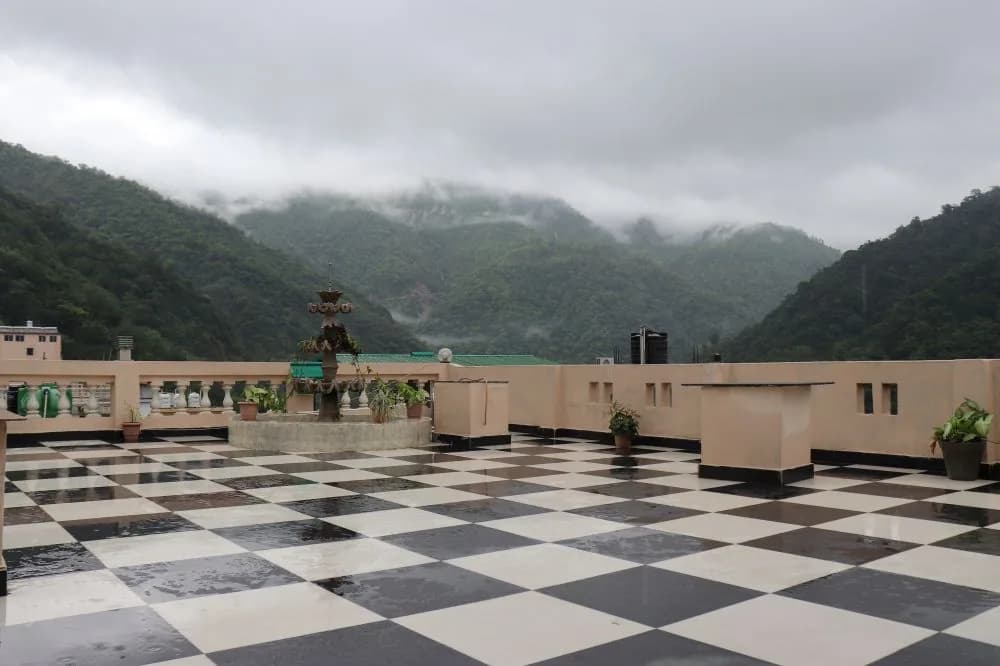
What to Pack for a Yoga Teacher Training in India
Complete packing list for a 28-day residential yoga teacher training in Rishikesh — what to bring, what schools provide, and what to leave at home.
Sudhanshu Badoni
Main Teacher · Lead FacultyMain teacher at Deep Yoga, Tapovan. Runs the YogaAsana YouTube channel (4K+ subs). · 12 yrs teaching
TL;DR
For a 28-day residential yoga teacher training in Rishikesh, pack one 50–60L checked bag plus a small day-pack. Three sets of practice clothing, layered casual wear for cool mornings, a headlamp, a refillable water bottle, basic first-aid, and your prescription medications. Most schools provide mats, blocks, and straps — leave yours at home.
- Total weight target: ≤15kg checked + 7kg cabin (well under standard 23kg airline limit)
- Climate range: 8°C mornings to 32°C afternoons depending on month
- What schools provide: mat, blocks, strap, bolster, blanket, sheets, towels
Air India and most international carriers to Delhi (DEL) allow 23kg checked plus 7kg cabin baggage in economy — a generous 30kg total that most yoga teacher training travelers do not need to use. Across hundreds of cohorts at Rishikesh schools, the consistent pattern from faculty observation is that the students who pack lightest finish the training most comfortably. Heavy bags do not survive the rickshaw rides up the steep lanes of Tapovan, the third-floor walk-up to most ashram dormitories, or the four-week intimacy with a roommate in a shared room.
The Complete Packing List
Organize the packing list into seven categories: practice gear, clothing, toiletries, documents, health kit, electronics, and the small comforts. Cover each below with what to bring, what to skip, and where it is actually used.
1. Practice Gear (less than you think)
Most reputable yoga schools in Rishikesh — including Deep Yoga Wellness — provide all of the following for the duration of your training. Confirm with your school before purchasing duplicates:
- Yoga mat (typically a standard 4mm rubber mat — fine for daily Hatha and Vinyasa practice)
- Two foam blocks
- One yoga strap
- One bolster (for restorative practice)
- A wool blanket (used both as a prop and for cool mornings)
What you should bring:
- Your own mat only if you have a specific preference (cork, jute, alignment-marked) — the school's mats are basic but functional. A premium mat adds 1–2 kg to your luggage.
- A small microfiber yoga towel for hot afternoon sessions in the warmer months (Mar–May, Sep–Oct). About 100g.
- Optional: a thin meditation cushion or zafu if you have a specific seat preference. Most students sit on the school's blankets folded into a wedge — this works.
2. Clothing — by month and by use
The climate of Rishikesh varies meaningfully across the year. Pack for the month of your training, not for "India" generically.
Practice clothing (3 sets minimum):
- 3 sets of comfortable practice tops + bottoms (leggings or loose pants). Cotton-blend ideal; pure synthetic gets sweaty in summer humidity.
- 2 sports bras for women.
- 1 light layer for cool morning practice (a long-sleeve cotton tee or thin merino top).
Casual / off-mat clothing:
- 2 pairs of loose pants or comfortable trousers (the school environment is casual; jeans are uncomfortable in heat).
- 3 t-shirts or kurtas. Cotton.
- 1 light cardigan or wool shawl (the wool shawl is genuinely useful — buy one in Rishikesh on day 2 for under $10; locally-made and properly warm).
- 1 set of warmer layers: hoodie or fleece, plus thermals if you train Dec–Feb.
- Underwear and socks for 7–10 days. Most schools have laundry service for $1–2 per kg, so you do not need a full month's supply.
- 1 lightweight rain layer (Apr–Jun and Sep–Oct see occasional unpredictable rain).
Footwear:
- 1 pair of walking sandals (Tevas, Birkenstocks, or similar) — your daily footwear.
- 1 pair of closed-toe walking shoes (light hikers or sturdy trainers) for the weekly hike to nearby waterfalls or temples.
- 1 pair of slippers for the dorm and shala (most schools require shoe removal at the entrance).
Specific to women:
- A long scarf or shawl is genuinely useful for temple visits, the evening Aarti at Triveni Ghat, and as an extra layer in cool morning practice. Buy locally if you do not bring one.
- Consider modesty conventions: yoga practice attire (leggings + fitted tops) is fine inside the shala; outside the school grounds, longer kurtas or loose pants over leggings are more respectful.
3. Toiletries — what to bring vs buy locally
Bring from home (genuinely hard to find in Tapovan):
- Your specific brands of contact-lens solution and cleaning supplies (bring enough for the full training plus a buffer).
- Sunscreen — quality international brands are scarce in Tapovan's small shops. Bring SPF 30+ for the rooftop pranayama sessions.
- Lip balm with SPF.
- Specialty skincare (retinols, anything prescription-grade) — basic moisturizers are widely available locally.
- Tampons / menstrual cups — pads are universally available; tampons are stocked only in select Rishikesh pharmacies.
- Deodorant in your preferred form (most local options are roll-on; sticks and aluminum-free brands are harder to find).
Buy locally — cheaper and easier:
- Shampoo, conditioner, body wash (Indian brands like Himalaya are excellent and made for the local water).
- Toothpaste and toothbrushes.
- Bucket/tongue scraper, oil-pulling supplies (everyone in Rishikesh stocks these).
- Small towels, washcloths.
- Laundry detergent if you prefer hand-washing — pharmacies sell single-use sachets.
4. Documents
- Passport with at least 6 months of validity remaining beyond your departure date.
- Indian e-Tourist visa printout (carry both digital and printed copies). For visa eligibility specific to your nationality, see our visa eligibility checker.
- Travel insurance documents — bring the policy number and emergency contact line. Mandatory for residential YTT.
- Yoga Alliance certificate from any prior training (for 300hr applicants).
- Acceptance letter from your school (most Indian customs officers do not ask, but it is reassuring to have).
- 2 passport-sized photographs (sometimes requested for school-internal certificates).
- Emergency contact information written on paper (in case your phone dies on day one).
- Photocopies or photos of all the above stored in cloud (Google Drive / Dropbox) and on a backup phone if you have one.
5. Health kit
The closest tertiary hospital is in Dehradun, 35km away. A well-prepared personal kit handles 90% of day-to-day issues.
- Prescription medications for the full training plus 1 week buffer. Indian pharmacies stock most common medications but specialty prescriptions are unreliable.
- Electrolyte sachets (10–15 packets) for the first week of digestive adjustment.
- Probiotics for the first 2 weeks.
- Activated charcoal capsules (for occasional digestive upset).
- Imodium or equivalent (for travel days — emergency only).
- Paracetamol or ibuprofen (also widely available locally).
- Antiseptic cream + bandages for small cuts.
- Tiger Balm or Volini gel for muscle soreness — both available locally for cheaper, but bring a small tube for the first week.
- Insect repellent — DEET-based for evening walks; locally-made citronella sticks are useful in the shala in summer.
- If you wear contact lenses: bring a backup pair of glasses. The dust in Tapovan can occasionally make contact lens wear uncomfortable.
- Female travelers: any specific menstrual-pain medication you rely on.
6. Electronics
- Phone with a universal travel adapter (India uses Type C, D, and M plugs — 230V).
- Power bank (the school may have intermittent power; useful as backup).
- Headlamp or small flashlight (genuinely useful for pre-dawn pranayama and evening walks back to the dormitory). Petzl Tikkina or equivalent.
- Headphones (for long flights and quiet self-study time).
- Backup phone or tablet (optional — some students bring an e-reader for the philosophy texts).
- Camera if photography is your thing — most students use phone cameras only.
Indian SIM cards (Airtel, Jio, Vodafone) are cheap and easy to buy on arrival at Delhi airport with your passport. Plan for 50–100 INR for a tourist SIM with a month of data. The school's Wi-Fi is usually reliable in common areas; data is your backup for room and outside.
7. Small comforts (the difference-makers)
Items that take up almost no space but materially improve a 28-day stay:
- A reusable stainless-steel water bottle (1L). The school provides filtered drinking water; refilling reduces plastic waste and saves money.
- Earplugs (essential for shared accommodation; the cohort wakes at different rates).
- Eye mask (the morning bell is at 5:00 AM; a Saturday lie-in occasionally requires an eye mask).
- Notebook + 2 pens (philosophy notes, daily journaling, sketches of asana alignment cues you want to remember).
- One book that is not yoga-related, for the rare moments of mental space outside the curriculum.
- Small pack of sticky notes or index cards for memorising Sanskrit asana names.
- A tea bag or favorite herbal tea bag set — the school provides chai, but a familiar tea is a small comfort in the first week.
What NOT to Pack
The most common over-packing mistakes:
- Multiple yoga mats or props. The school provides everything. Bringing your own mat is fine if you have a strong preference; bringing your own blocks, straps, or bolsters is duplication.
- A full month's clothing. Laundry service is cheap and reliable (most schools offer same-day or next-day return). 7–10 days of underwear and 5–6 sets of casual wear is enough.
- High heels, formal wear, jeans. No use for any of them in the school environment.
- A laptop unless you have specific work commitments. The schedule does not accommodate sustained laptop work, and theft risk in shared rooms is non-zero. A phone + tablet handles 95% of needs.
- Western kitchen ingredients. Some students bring almond butter, protein bars, or special supplements. The school provides three sattvic vegetarian meals daily; supplements are usually unnecessary and Western imports take up valuable luggage space.
- Hairdryers, curling irons, or heated styling tools. The voltage is different (230V); the school environment is casual; nobody uses these.
- Books beyond essential study texts. The Yoga Sutras and a basic anatomy text are useful. Multiple paperbacks are dead weight; you will not have time to read them.
- Anything irreplaceable. Leave heirloom jewelry, expensive watches, or sentimental valuables at home. Shared accommodation increases the risk of accidental loss.
Climate Guide by Month
Rishikesh sits at 372m elevation in the Himalayan foothills. The climate varies more than most international students expect. Pack to the specific month of your training:
- October–November: The classic post-monsoon season. Mornings 12–18°C; afternoons 22–28°C. Light layers, full-length practice clothing, cardigan for evenings.
- December–February: Cold mornings (4–10°C), warmer afternoons (16–22°C). Real winter — bring thermals, a fleece, warm socks, a beanie for pre-dawn pranayama. The cold is the discipline; do not skip the layers.
- March–April: Spring warming. Mornings 12–18°C; afternoons 25–32°C. Layered approach; afternoon sessions can be sweaty.
- May–June: Genuinely hot. Afternoons can exceed 38°C. Many serious schools (Deep Yoga among them) avoid running 200hr cohorts in May–June for this reason.
- July–September: Monsoon. Heavy intermittent rain, high humidity, rising Ganges, occasional power outages. Most reputable schools schedule a teaching break in August.
Bags + Airport Tips
- Bag style: A 50–60L backpack with a rain cover beats a wheeled suitcase. Tapovan's lanes are uneven stone; the walk from the road to most ashrams involves stairs. Wheels do not survive.
- Day-pack: A small 15–20L day-pack for weekend hikes, the daily walk to the shala, and as your in-flight cabin bag.
- Delhi airport (DEL) to Rishikesh: Three options. (1) Domestic flight to Dehradun (DED), then 35km taxi — fastest, ~$120 USD all-in. (2) Overnight train Delhi to Haridwar (sleeper class is fine), then 25km taxi — ~$30 USD, 8 hours. (3) Direct car or shared taxi from Delhi — 6 hours, ~$100. Most schools include airport pickup from Dehradun in the program tuition.
- Customs: India does not require a customs declaration for personal-use yoga gear, electronics, or medications in reasonable quantities. If you carry more than $5,000 USD cash equivalent, declare it.
The "Minimum Viable" Packing List (read this if nothing else)
If you read only one paragraph of this article, read this one. The bare-minimum list that has worked for thousands of yoga teacher training graduates:
- Passport, visa printout, travel insurance, acceptance letter, 2 passport photos.
- 3 sets of practice clothing.
- 1 pair of walking sandals + 1 pair of trainers + slippers.
- 2 pairs of loose pants, 3 cotton tops, 1 cardigan, 1 light rain layer, 1 fleece (if Dec–Feb).
- Toiletries that are hard to find locally (sunscreen, lip balm, contact-lens solution, deodorant, tampons if applicable, prescription skincare).
- Health kit (prescriptions, electrolytes, probiotics, basic OTC).
- Phone, charger, universal adapter, power bank, headphones, headlamp.
- Reusable water bottle, earplugs, eye mask, notebook + pens.
- One book that is not about yoga.
- 15kg max in the checked bag, 7kg in the carry-on.
If you can pack only the items above, you have everything you need. Everything else can be bought in Rishikesh for less than what it would cost to ship.
Final Notes
The packing decisions matter less than the practice does. Twenty-seven days into the training, you will not remember which brand of leggings you packed. You will remember which mornings you got up to make the 5:30 AM bell, which philosophy lecture cracked something open in you, which student became your closest friend in week three.
For the daily rhythm those mornings fall into, see our breakdown of the daily schedule of a yoga teacher training in Rishikesh. For what the broader month feels like, the 200-hour complete guide covers the experience week by week.
Pack light. The only thing that has to be heavy is your willingness to be present.
Frequently asked questions
Do I need to bring my own yoga mat to a yoga teacher training in India?
No. Most reputable yoga schools in Rishikesh, including Deep Yoga Wellness, provide a yoga mat, two foam blocks, a strap, a bolster, and a wool blanket for the duration of your training. Bringing your own mat is fine if you have a strong preference for a specific brand or material (cork, jute, alignment-marked), but it adds 1–2 kg to your luggage that you do not need to carry.
What clothing should I pack for yoga teacher training in Rishikesh?
Three sets of practice clothing (cotton-blend, comfortable, full-length leggings preferred over shorts), two pairs of loose casual pants, three cotton tops or kurtas, a light cardigan, a wool shawl (or buy one locally for under $10), and seasonal layers depending on month. December through February requires thermals and a fleece. May through September only matters if you are training during the off-peak hot months.
What medications should I bring for a yoga teacher training in India?
Bring all your prescription medications for the full duration plus a one-week buffer. Indian pharmacies stock most common medications but specialty prescriptions are unreliable. Add electrolyte sachets (10–15 packets), a probiotic for the first two weeks, antiseptic cream and bandages, paracetamol, an over-the-counter anti-diarrheal for emergencies, and any specific menstrual-pain medication you rely on. The closest tertiary hospital is in Dehradun, 35km from Tapovan.
Is it safe to drink the water in Rishikesh?
Tap water in Rishikesh is not safe for international travelers. Drink filtered or bottled water exclusively. All reputable yoga schools provide filtered drinking water in dispensers throughout the campus, and a refillable stainless-steel water bottle is one of the most useful items to pack. For brushing teeth, most students use bottled water for the first week and switch to tap once their stomach has adjusted.
What is the maximum luggage weight for yoga teacher training in India?
Air India and most international carriers to Delhi allow 23kg checked plus 7kg cabin baggage in economy class — a 30kg total that you should not need to use. A realistic target is 15kg checked plus 7kg cabin (22kg total). Heavier bags are physically difficult to move through Tapovan's narrow lanes, up the stairs to most ashram dormitories, and into shared rooms with limited storage. Pack light; the mental cost of overpacking is higher than the financial cost of buying small items locally.
What should I NOT pack for yoga teacher training in Rishikesh?
Skip multiple yoga mats or props (the school provides them), a full month of clothing (laundry service is $1–2 per kg), formal wear or jeans, a laptop unless you have specific work commitments, hairdryers and heated styling tools (different voltage), Western kitchen ingredients or supplements (the school provides three sattvic meals daily), books beyond essential study texts (the schedule does not allow recreational reading), and any irreplaceable valuables (jewelry, expensive watches, sentimental items) — shared accommodation increases the risk of accidental loss.