Pranayama Techniques: A Beginner's Guide to Yogic Breath Control
A beginner's guide to pranayama — the five foundational breathing techniques, how to build a daily 10-minute practice, and when to seek a teacher.
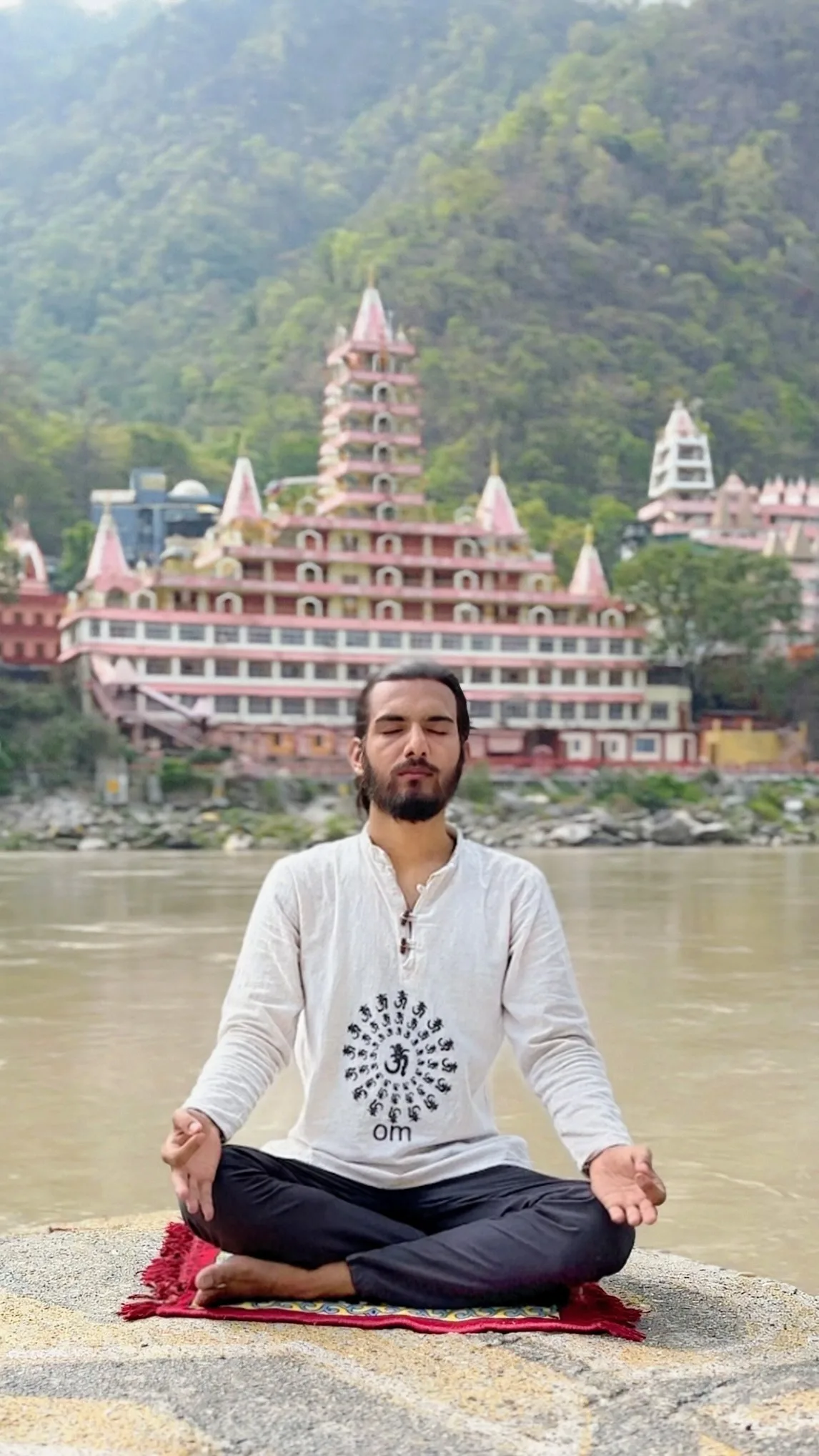
Sudhanshu Badoni
Main Teacher · Lead FacultyMain teacher at Deep Yoga, Tapovan. Runs the YogaAsana YouTube channel (4K+ subs). · 12 yrs teaching
TL;DR
Pranayama is the yogic discipline of conscious breath control, defined by Patanjali as the fourth limb of the eight-limbed path. Five foundational techniques — diaphragmatic breath, Nadi Shodhana, Ujjayi, Kapalabhati, and Bhramari — are enough for the first six months of daily practice.
- Daily commitment to start: 10–15 minutes, ideally before sunrise
- What you need: a cushion, an empty stomach, and consistency — no equipment
- When to learn from a teacher: Kapalabhati, Bhastrika, and any retention practice — never self-taught from text alone
According to a 2017 systematic review published in the Journal of Clinical Medicine Research, controlled-breathing practices like pranayama produce measurable downregulation of the sympathetic nervous system within a single 10-minute session — heart rate variability increases, cortisol drops, and parasympathetic tone strengthens (Zaccaro et al., 2018, Frontiers in Human Neuroscience). The same review found that in long-term practitioners, the effects compound: lower resting blood pressure, improved sleep quality, and more stable mood regulation.
What is Pranayama?
Pranayama is the yogic discipline of conscious breath regulation. The word comes from two Sanskrit roots: prana, meaning life-force or vital energy, and ayama, meaning expansion or restraint. So pranayama is, literally, the expansion or restraint of the breath in service of expanding the life-force.
Patanjali defines pranayama in the second chapter of the Yoga Sutras (sutra 2.49) as "the cessation of the movement of inhalation and exhalation," placing it as the fourth of the eight limbs of yoga — after the ethical observances (yamas and niyamas) and the postures (asana), but before the inward-facing limbs of meditation. The order is deliberate. Pranayama is the bridge between the body and the mind. Master the breath, and the rest of the path opens.
In Hatha Yoga, pranayama is more practical and prescriptive. The Hatha Yoga Pradipika — a fifteenth-century text that codified the physical practices of yoga — describes eight specific kumbhakas (breath-retention practices) along with their physical, energetic, and contemplative effects. Most of what is taught today in international yoga teacher training programs derives from this lineage.
Why Pranayama Matters Now
The Western yoga student of 2026 typically arrives at pranayama through the back door. They start with an asana class. They like how they feel after. They go to more classes. Eventually a teacher introduces three minutes of Nadi Shodhana at the end of practice, and they notice — for the first time — that they can change how they feel by changing how they breathe.
This is not a small noticing. It is the entire practice in miniature.
The science has caught up to what yogic texts described two thousand years ago. Slow, deliberate breathing at six breaths per minute (the resonance frequency for most adults) maximizes heart rate variability — the marker most consistently associated with stress resilience, emotional regulation, and longevity. Alternate-nostril breathing measurably balances activity between the brain hemispheres. Long exhalations stimulate the vagus nerve, the major nerve of the parasympathetic (rest-and-digest) nervous system. None of this is mystical. It is mechanism.
What pranayama gives you that breathwork apps and Wim Hof videos cannot is the embedded context. The techniques are not standalone hacks. They sit inside a ten-thousand-year tradition that has worked out, by trial and patience, which breath patterns to do at which time of day, in which sequence, after which postures, with what mental focus. The Hatha Yoga Pradipika does not present pranayama as a list of life hacks. It presents it as a discipline that requires structure.
The Five Foundational Techniques
Of the dozens of pranayama practices catalogued in the classical texts, five are appropriate for beginners and form the foundation of any serious daily practice. The remaining advanced techniques — Bhastrika at speed, Murcha, Plavini, the bandha-locked retentions — should not be self-taught from articles. They require an experienced teacher present in the room.
1. Diaphragmatic breathing (the foundation)
Before any of the named techniques, the student must learn to breathe diaphragmatically. Most adults in modern life breathe shallowly into the upper chest — a stress-pattern habit that perpetuates stress. The first job of a pranayama practice is to undo this.
How to practice. Sit on a cushion with the spine tall, or lie on your back with the knees bent. Place one hand on the upper chest, one on the belly. Inhale slowly through the nose. The belly hand should rise; the chest hand should remain almost still. Exhale completely. The belly hand falls. Continue for ten minutes daily, at the same time each morning, for two weeks before moving on to the named techniques.
2. Nadi Shodhana (alternate nostril breathing)
The most important calming and balancing pranayama. Translates as "channel-cleansing breath." In yogic physiology, the right nostril activates the pingala nadi (the energetic channel of activation, the sun) and the left nostril activates the ida nadi (calming, the moon). Alternating between them balances the two.
How to practice. Sit comfortably. Place the right thumb on the right nostril and the right ring finger on the left nostril. Close the right nostril; inhale slowly through the left. At the top of the breath, switch — close the left nostril and open the right. Exhale through the right. Inhale through the right. Switch. Exhale through the left. That is one full round. Begin with five rounds; build to twenty over the course of three months. Aim for an even count of four seconds in, four seconds out.
3. Ujjayi (ocean breath)
The breath sound used during Ashtanga Vinyasa asana practice. Ujjayi means "victorious." The mechanism: a slight constriction at the back of the throat creates a low oceanic sound on both inhale and exhale, audible to the practitioner and (faintly) to anyone within a few feet.
How to practice. Inhale through the nose with the mouth closed, slightly tightening the muscles at the back of the throat as if you were about to whisper the syllable "haaaa." Exhale the same way, throat slightly tightened, breath audible. Both inhale and exhale should be roughly equal length and equal depth. Use this breath during your asana practice for ten minutes daily and during seated meditation. Ujjayi is the foundational continuous breath — once it becomes automatic, you can layer the more demanding techniques on top.
4. Kapalabhati (skull-shining breath)
An energizing, cleansing practice. Sanskrit translation: "skull-shining" — the practice is said to clarify the mind and the sinuses. The mechanism: rapid, forceful exhalations through the nose with passive inhalations, creating a pumping action of the abdominal muscles.
How to practice. Sit comfortably. Begin with normal breathing. Then, on each exhale, contract the lower belly sharply, pushing breath out through the nose in a short forceful burst. The inhale is automatic and passive — you do nothing; the abdomen relaxes and the breath returns. Aim for one exhale per second, thirty exhalations to start. Take three normal breaths between rounds. Begin with two rounds of thirty; build to three rounds of fifty over six months. Do not practice Kapalabhati if you are pregnant, have unmanaged hypertension, recent abdominal surgery, or untreated heart conditions. This is the first technique where contraindications are real — learn it from a qualified teacher before attempting daily independent practice.
5. Bhramari (humming bee breath)
A beginner-accessible calming practice. Bhramari translates as "female bee" — the practice produces a low humming sound on the exhale, similar to a bee's wings. The mechanism is well-studied: the humming vibration stimulates the vagus nerve in the throat, producing a measurable parasympathetic response within a single 10-minute session.
How to practice. Sit comfortably. Close the eyes. Place the index fingers gently over the closed eyelids and the thumbs at the small flap (tragus) of each ear. Inhale fully through the nose. On the exhale, with the mouth closed, produce a steady low humming sound for the entire length of the breath. Feel the vibration in the head and chest. Do nine to twelve rounds. Bhramari is the safest pranayama to teach yourself — there are no contraindications for the standard form.
How to Start a Daily Practice
The single biggest predictor of pranayama benefit is consistency. Twenty minutes of daily practice for six months produces effects that twenty hours of weekend workshops do not. Start small and stay small.
Week 1–2: foundation
- Diaphragmatic breathing, 10 minutes, mornings only.
- Same place, same cushion, same time. The repetition matters more than the duration.
Week 3–4: introduce Nadi Shodhana
- 5 minutes diaphragmatic breathing
- 5 rounds Nadi Shodhana, 4-second count
- 2 minutes silent sitting
Month 2: add Ujjayi during asana
- Continue morning practice as week 3–4
- Apply Ujjayi during your existing yoga or movement practice — let it become the continuous breath
Month 3: add Bhramari
- 5 min diaphragmatic, 5 min Nadi Shodhana, 9 rounds Bhramari, 5 min silence
- Total: ~20 minutes
Month 4 onward: Kapalabhati, with a teacher
- Do not introduce Kapalabhati to daily practice until you have learned it in person from a qualified yoga teacher who has watched you do it. The contraindications are real, and the technique is easy to do wrong (using throat instead of belly, or breathing too forcefully).
Common Mistakes Beginners Make
From years of teaching pranayama to international students at our 200-hour and 300-hour residential programs in Rishikesh, the same five mistakes appear consistently:
- Forcing the breath instead of allowing it. Pranayama is precise but never aggressive. If you feel strain in the throat, neck, or face, the count is too long. Reduce.
- Practicing on a full stomach. Always practice before food, not after. Wait three hours after a full meal.
- Lying down instead of sitting up. Diaphragmatic breath training can be done lying down; the named techniques cannot. The spine must be tall and unsupported for the energetic mechanism to work.
- Practicing Kapalabhati or Bhastrika without supervision. The risk profile is real. Wait for a qualified teacher.
- Stopping when nothing seems to happen. The first three weeks of consistent practice often feel uneventful. The shift typically arrives in the fourth or fifth week. Continue.
When to Learn From a Teacher
You can build a respectable beginner pranayama practice from this article and a few well-chosen video tutorials. Most students find that the first six months of daily practice unfold productively without a teacher present.
What you cannot self-teach: the advanced retention practices (kumbhaka with bandha locks), the energetic distinctions between practices done at sunrise vs sunset, the integration of pranayama with classical philosophy, and the experience of practicing in a group of twenty other dedicated students at five in the morning on the banks of the Ganges. For those, you eventually have to go and study.
Our 200-hour yoga teacher training in Rishikesh dedicates 30+ hours to pranayama and meditation across the four-week residential program. The advanced 300-hour module devotes 50+ hours to deeper kriya and bandha work. For students who arrive with the foundational five techniques already in their daily practice, the training is significantly more rewarding — you build on existing skill rather than starting from zero.
If you are not ready to commit to a residential training, even a 7-day yoga retreat in Rishikesh introduces pranayama in a structured, daily-practice format. Read our 7-day Rishikesh retreat itinerary for a feel of what daily pranayama looks like inside a structured program.
Pranayama in Context: The Bigger Path
It is important to understand that pranayama is not the destination. Patanjali places it as the fourth of eight limbs precisely because it is the gateway to the more interior practices — pratyahara (sense-withdrawal), dharana (concentration), dhyana (meditation), and samadhi (absorption). The breath disciplines are the doorway. They are not the room.
This is why most serious yoga students who develop a daily pranayama practice eventually find themselves drawn to a longer residential format. The breath produces clarity. The clarity produces curiosity. The curiosity produces the questions that only sustained immersion in the philosophical and meditative traditions can answer. For those questions — and the people who carry them honestly — Rishikesh remains, two thousand years later, the place where the path is taught most completely.
Begin with diaphragmatic breath this week. Build from there.
Frequently asked questions
What is the best pranayama technique for beginners?
Diaphragmatic breathing — the foundation underneath all named pranayama practices. Spend two weeks practicing only diaphragmatic breath for 10 minutes each morning before introducing Nadi Shodhana (alternate nostril breathing). Most beginners attempt advanced techniques too early and never establish the underlying foundation.
How long should a beginner practice pranayama daily?
Start with 10 minutes daily, ideally at the same time each morning before food. Build to 20 minutes over the course of three months. Consistency at a small dose produces dramatically better results than intermittent long sessions. Twenty minutes a day for six months is the standard threshold for measurable cardiovascular and stress-regulation benefits.
Is it safe to practice Kapalabhati without a teacher?
No. Kapalabhati has real contraindications including pregnancy, unmanaged hypertension, recent abdominal surgery, and untreated heart conditions. The technique is also commonly performed incorrectly when self-taught — using throat tension instead of abdominal pumping. Learn Kapalabhati in person from a qualified yoga teacher who can watch you do it before integrating it into daily practice.
What time of day should I practice pranayama?
Traditional teaching prescribes the early morning before sunrise — when the stomach is empty, the air is fresh, and the mind is uncluttered. If a 5 a.m. practice is not realistic, the second-best window is late afternoon, again before food. Avoid practicing within three hours of a full meal or just before sleep — energizing techniques like Kapalabhati can disrupt sleep onset.
Can pranayama replace meditation?
No, but it prepares for meditation in a way that nothing else does. In the eight-limbed framework of Patanjali's Yoga Sutras, pranayama is the fourth limb and meditation (dhyana) is the seventh. The breath disciplines stabilize the nervous system enough that the mind becomes available for sustained concentration. Most students who attempt meditation without first establishing a pranayama practice find their attention scattered. The order matters.
How is pranayama different from breathwork apps and Wim Hof breathing?
Modern breathwork systems often borrow specific techniques from pranayama — Wim Hof's method is a variant of Tibetan tummo, which itself is a relative of Bhastrika. What pranayama provides that the apps cannot is the embedded sequencing: which technique to do at which time of day, in which order, after which postures, with what mental focus. The Hatha Yoga Pradipika and the Yoga Sutras treat the breath disciplines as part of a complete system of practice rather than as standalone life hacks. Most serious breathwork practitioners eventually trace their practice back to the source for this reason.